


The Environment Agency has released an update on its £200m flood and coastal innovation programmes.
In the mid-programme update, Julie Foley, Director of Flood Risk Strategy and Adaptation, Environment Agency, outlines some of the achievements so far, examples of the best innovations and learnings, as well as challenges encountered.
The flood and coastal innovation programmes include the:
- flood and coastal resilience innovation programme
- coastal transition accelerator programme
- adaptation pathways programme
Achievements outlined involve pilot projects focused on nature-based solutions, community resilience and infrastructure adaptation. Specific successes include the creation of 97 natural flood management interventions; the installation of 572 river flow, rainfall and surface water monitoring sensors; and the funding of 25 PhD positions to support the development of the next generation of flood experts.
Learnings in the mid-programme report are grouped into five themes:
- Flood and coastal resilience can unlock significant wider social, economic and environmental benefits for people, places, and wildlife
- A lack of understanding and evidence hinders the coordination and delivery of groundwater flood risk management
- Continual monitoring of flood and coastal resilience is vital to measuring performance and evaluating benefits over time
- Flood and coastal resilience requires strong local leadership and governance, including community and political engagement
- Third sector organisations are often critical to the effective delivery of flood and coastal resilience projects
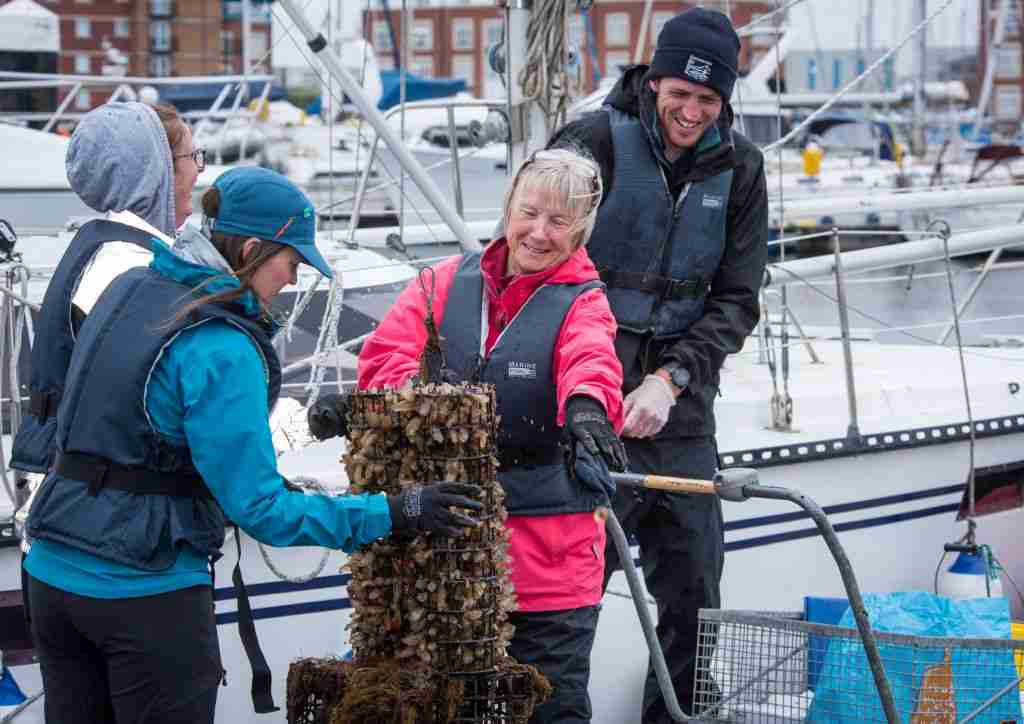
One such nature-based solution that is improving coastal resilience and has the potential to unlock economic benefits is the Stronger Shores project in South Tyneside. Stronger Shores is embracing nature-based solutions by establishing oyster reefs, seagrass meadows and kelp forests, all of which can help to boost coastal resilience.
Moreover, the Stronger Shores team is partnering with academia to understand how such measures can reduce coastal erosion and deliver local economic benefits from an improved marine environment.
When it comes to challenges, the mid-programme report outlines a number of examples where trialled methods or techniques have not worked as intended, or governance, policy or funding challenges may be impeding progress.
One example cited is the Reclaim the Rain project in Suffolk, which has found it difficult to navigate the different policy, funding and regulatory frameworks for flood risk management and water resources management. As a result, the project has struggled to align its twin goals of enhancing both flood and drought resilience.
For more information on all the achievements, learnings and challenges, read the full £200m flood and coastal innovation programmes: mid-programme report.
To read similar articles, check out our Leadership channel
