Well over 100 years ago, Edith Smith become the first female police constable with powers of arrest. We then had to wait until 1995 for the first female chief constable, Pauline Clare, to be appointed. Thankfully, we have progressed to equality in so many ways, but there is still a lot of work to be done with women’s police uniform and how it fits with the different stages of women’s lives.
There are approximately 150,000 police officers in England and Wales 58,000 of which are aged 41 to 55 years old. We know that women make up around a third of the officer workforce so on that basis we can assume that 20,000 women police officers are transitioning through the menopause. This isn’t just an officer issue of course, so we must ensure the most experienced proportion of our female workforce can continue to serve our communities throughout this part of their lives.
Impact of menopause on women
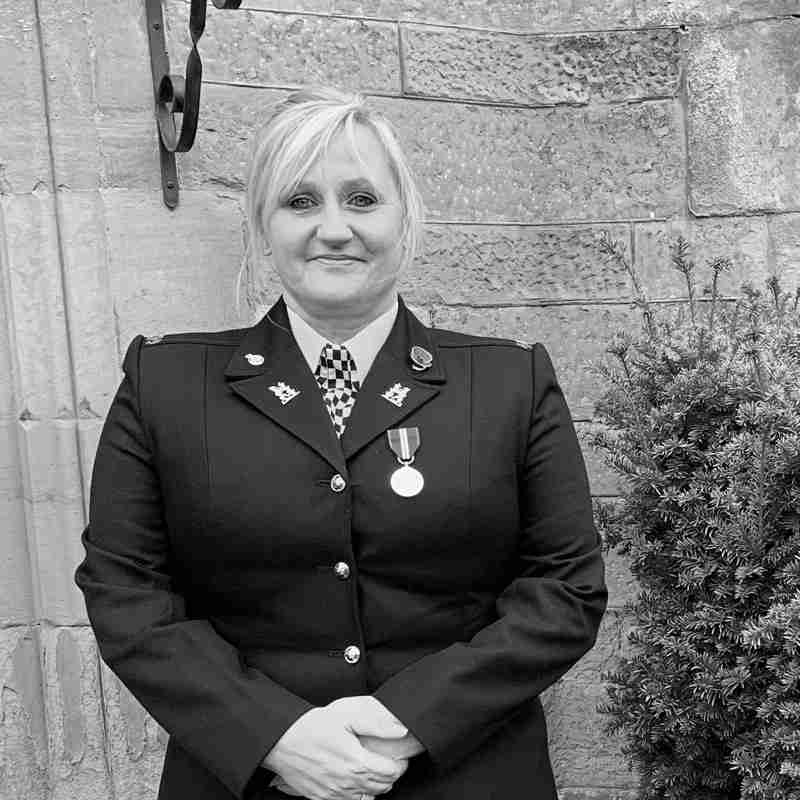
I am the Police Federation Menopause lead. We know through extensive research across policing in England and Wales that the menopause can completely knock the stuffing out of you at a time that you are thriving and excelling within the workplace. Whether it’s hot flushes, temperature changes, night sweats, lack of sleep or the anxiety and lack of confidence, this all happens over an undetermined period that can last for many years.
The employer’s responsibility to the health and welfare of all the workforce is well legislated and documented. Police employers must ensure that experienced, capable, invested members of the team can continue to deliver for their communities and not leaving their jobs and chosen careers because they can’t cope with the job and the menopause.
Uniform norms
As recently as the 1980s, female officers were issued with different uniform to men, it included police skirts and smaller truncheons to fit inside police handbags. Today, women police officers wear trousers but when I look at the trousers we must wear, I have many concerns.
It should not be the case that women have to wear trousers designed and tailored to fit a man’s body. The heavy weight material does not breathe, and it doesn’t cope well with fluctuating temperatures experienced by many menopausal women. The fit of the waistband and the gusset means that often women will buy trousers two sizes too big to alleviate the discomfort of seams that don’t work for a woman’s form.
It’s not much better when it comes to shirts. We need access to better ventilated uniform alternatives such as lighter/breathable material for black ‘wick away’ shirts, and white cotton formal shirts.
Flexible approaches
Police officers are entitled to an allowance for uniform, but that can amount to little more than three shirts and pairs of trousers which means that there is limited time for washing in between shifts. We would like to see more flexibility around uniform allowances that reflect the stages in women’s lives and have developed a wellbeing passport that can help with this thinking.
National survey of experience
We are championing initiatives across all forces to ensure change, education, support, processes, policies and of course examples of good practice being highlighted across policing. We were the first to create a national policing survey that reached out to all in policing, not just women, but line managers, colleagues, senior leaders to understand what everyone knows and understands about support in policing to transition through menopause.
This survey was completed by over 6,000 respondents and was the evidence base to show all forces that improvements were needed. It highlighted, lack of support, lack of understanding, people considering leaving due to issues, lack of support for promotion, and of course lack of flexibility of uniform along the lines of what I’ve described above.
Menopause guidance
We then used the data to work with the College of Policing, National Police Chiefs’ Council, UNISON and the Menopause Action Group to create the first national guidance which was published in October 2021. Management of Menopause Transition in the Police Service detailed the minimum expectations and range of support that should be in place within the workplace. All 43 chief constables have signed up to it and accepted the guidance.
We champion police forces that have created policies, working groups, training, and education, mentoring and buddies. For example, we know that Thames Valley Police had adopted alternative uniforms to provide choice for women transitioning through the menopause. Thames Valley Police is a trailblazer, we now need the other 42 forces to follow suit and for all of them to continue to look for innovations to assist women truly achieve parity in this last bastion of inequality.
Learning and sharing
The Police Federation continues to push for uniform choice that reflects the stages of women’s lives. We are now looking to create the second iteration of the national survey, to evidence the progress forces have made, and establish what more needs to be done. We want to find out if the guidance is working and seek adjustments where it is not.
The supply of innovative alternatives to uniform is an area of development that should be so easily available in a modern police force. I can pick up my phone and find any manner of material, size, style of clothing from across the world or locally within a matter of minutes and have it delivered to my door. And yet my working uniform remains in the same style, fit, material and distribution as seen in the early 2000s.
Call to action
I know we must regulate procurement so that we spend our finite budgets efficiently and effectively and I know we all must look the same for many valid reasons, but surely suppliers could be innovative in creating options that police forces could procure through national frameworks that cater for all women in policing?
I am very happy to talk to any supplier who wants to innovate and disrupt the market for police uniform suitable for women transitioning through the menopause.
This article originally appeared in the April 2023 edition of Emergency Services Times and has been updated.