


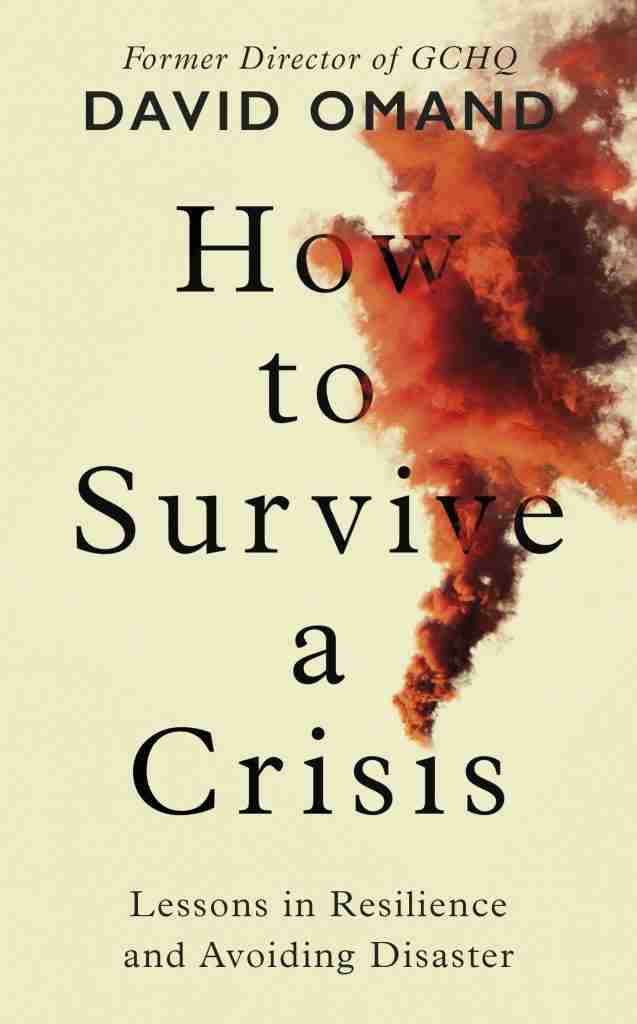
‘Crisis is an overworked word,’ writes Sir David Omand in the introduction to his book, How to survive a crisis. He goes on to explain the essence of crisis and why it differs from emergencies. Not all emergencies need become crises, he cautions, being well prepared ‘to make ourselves more resilient’ means we can all be better able to manage shocks when they arise.
Sir David is eminently qualified to write about this topic. As a former director of GCHQ and top mandarin at the Home Office, he has a lifetime of experience in defence, security and intelligence; he draws on examples of crises throughout this book in a way that only an insider could.
A resilient nation
He argues that we need a national effort to create a resilient nation. The Government says we need a whole of society approach to resilience and Sir David agrees, explaining that societal resilience is both physical and moral. Preparation is vital. He says that a resilient nation designs in resilience in all aspects of society and economy.
The spectrum that runs from emergency to crisis to disaster is a continuum not a permanent state and for him, there are tools to ensure that slipping into disaster is avoided.
‘We can save a great deal of heartache by identifying early the crises that are smouldering below the surface – just waiting for the right conditions in order to burst into flames.’
When Sir David arrived at the Home Office in 1997 at the start of the new Labour government, he found an emergency planning function so decimated and dated, he describes it as a ‘skeleton service.’ He tells us, ‘Frustrated by the inadequacy of [these] arrangements for a modern crisis, and the irrelevance of the old emergency powers law, Prime Minister Tony Blair agreed on the need for major reform.’ Referring to the role of the Civil Contingencies Secretariat in that change and the subsequent 2004 Civil Contingencies Act, today we see the former disbanded the latter still a major plank of resilience today.
Interestingly, he tells us that one of the consequences of the Foot and Mouth crisis that affected the UK in the early part of 2001 was the creation of the scientific advisory group, SAGE. This group of course gained national prominence through the Covid crisis and understanding about its role is emerging from the ongoing Covid Inquiry today.
Vital insights
There is so much to learn from this book and Sir David helpfully provides takeaways at the end of each chapter. It’s a reminder for those who are immersed in resilience and emergency planning and a vital insight for everyone else.
‘We need a more resilient national infrastructure’ a new endeavour, he concludes, to build up resilience in every walk of life. Drawing on the language of policing, he argues that once the public trust that the nation has the resilience to ride out future hazards, then it ‘the opportunities of the future can be seized.’ He remains, thankfully, an optimist.
