











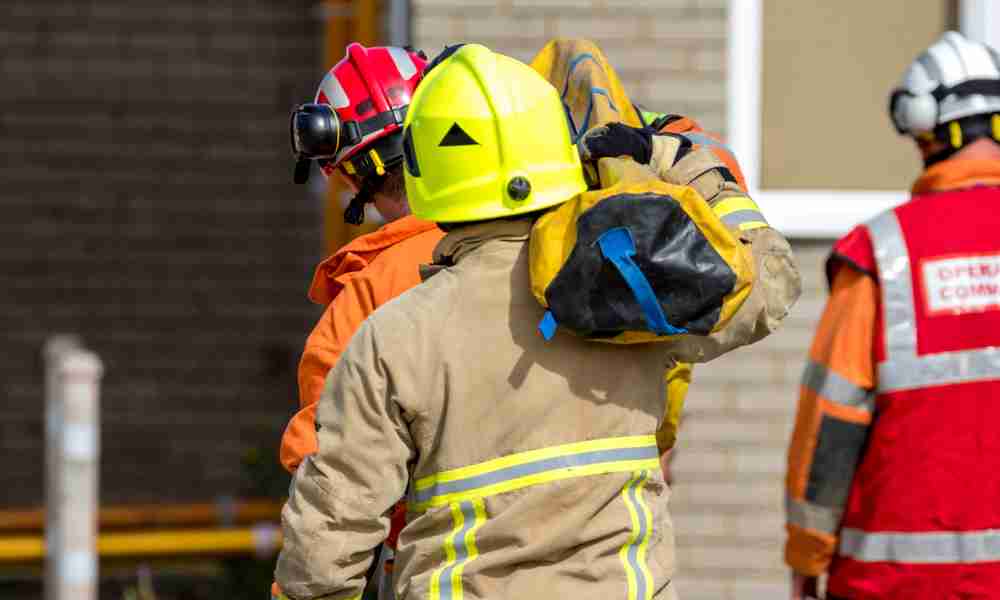
In November, 150 people gathered at the University of Cranfield to talk about the impact of contaminants on firefighter health. I shared my own experience of cancer after a 32-year career in the fire and rescue service as I am passionate about improving awareness of the risks and the need for preventative health monitoring for all.
I have seen many of my colleagues and friends lose their lives to cancer. Frank and Mark were two firefighters on my watch who were stalwarts and great watch members: always dependable, calm, and full of humour and kindness. Their memory, along with so many others lost during my career, is my driver and the reason for my passion to push for change and honour the brave souls I had the pleasure to work with.
In the firefighting community, we come together and support each other, freely giving everything, but then stand months later in a funeral procession, lining the road outside the crematorium, lamenting the passing of yet another friend.
Cancer diagnosis
In 2011, I retired from front-line fire service operations. However, three months later, my wife was diagnosed with aggressive non-Hodgkin’s lymphoma. What followed was months of chemotherapy and radiotherapy. Our oncology nurse told us we came within a month of losing her, which was quite a hammer blow. She was just 43 at the time.
This experience made me wonder if her handling and washing my smelly, dirty clothes post-incident caused my wife’s cancer. Can we say for sure that it did not? It raises the question of whether our families are safe due to our own practices.
My own prostate cancer diagnosis came in March 2013, and the cancer was found to be best treated with surgery. Although it was supposed to be a routine operation, complications arose, and I came close to losing my life on two occasions. It had a profound effect on my outlook and health, and the impact on the mental health of my family was also very clear to see.
These experiences made me realise the need for support in mental health for families in any organisation. We must ensure that there is a process in place to support colleagues in such positions, and we should not forget their families.
Sharing experience, raising awareness
During the Covid pandemic, I organised several webinars for the airport firefighting community. One of these was on the risk of firefighter cancer, and it touched a nerve. Dr Dave Megson is a senior lecturer in chemistry at Manchester Metropolitan University, he spoke about the risk of ultra-fine particulates in the airside environment. I was already aware of the great work being done by Professor Anna Stec at the University of Central Lancashire and the Fire Brigades Union’s DECON program, as well as others across the world who had worked hard to raise awareness and drive change.
Over time, I realised that retired members were being missed in these efforts, and firefighters in other areas, such as aviation and industrial settings, had not been included. As many of my clients were from these areas, I wanted to do something about this. I met Alisdair Couper, the Managing Director of Terberg DTS and Abby Hannah from Stedfast Advanced Barrier Technologies to discuss what we could do and alighted on the idea of a national seminar which would be free to attend.
Defining the invisible risk
We were delighted to see 150 delegates attend our free national seminar which was open to all. Alisdair Couper, the Managing Director of Terberg DTS was a generous sponsor and hosted the day; Abby talked about ultra-fine particulates and described them as the invisible risk.
We heard from a range of speakers including Dr Stec. She talked about the research she has been doing on firefighters and exposure to contaminants. The results of her survey of over 11,000 firefighters are startling and she said we must move away from a culture where it is a badge of honour to not clean personal protective equipment after a job. She is calling for better policies, a change of culture, increased awareness of the risks and preventative health monitoring to catch cancers earlier.
Alongside Dr Stec, we learned about the 30 second risk checker developed by Prostate Cancer UK and got some international perspective from the Norwegian Firefighters Organisation.
Building a movement
The seminar was a great success, but it is only the starting point. Looking to the future, we are committed to building a community of responders who share knowledge and best practices to enhance their safety and effectiveness. To this end, we are developing an association that will be open to all responders, not just firefighters, and will be free to join. This association will serve as a platform for discussion and collaboration and will be affiliated with similar organisations around the world.
It isn’t just firefighters who respond to incidents, it’s important that we raise awareness of the invisible risk with our colleagues in police, ambulance and other agencies. We are encouraging participation in the association and future seminars from all responder agencies.
We are exploring the possibility of holding a second seminar in November 2023, which will be open to a wider audience. This will provide an opportunity to showcase the changes that the 2022 seminar brought about, and to discuss what further improvements can be made.
We believe that the key to effective joint responses is a shared ethos of responder awareness and preparedness. It is time for all responders to recognise the risks inherent in these incidents, and to take action to mitigate them. By working together, sharing knowledge, and adopting best practices, we can make a real difference to the safety of all those involved in responding to incidents.
