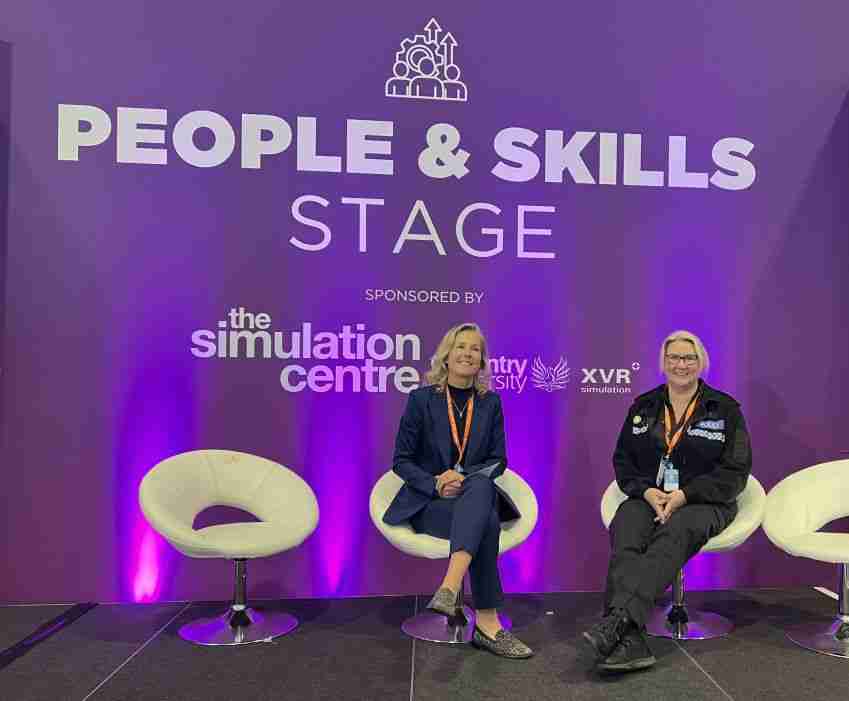
One of the benefits of presenting at The Emergency Services Show is the opportunity to highlight how to improve working on the frontline and this year I was delighted to be able to join a conversation on the People and Skills Stage with Shendy Blakemore, a police officer from West Midlands Police, about how to have a confident menopause.
I am a former police Inspector also from West Midlands Police, but now I run my own menopause training business. Shendy and I had never met prior to this event but what we realised very early on is that we both had very positive experiences around menopause in the workplace.
One of the most important aspects of that experience was having a manager who ‘got it.’ A manager who knew that you were hard working, wanted to carry on being productive but were struggling at that point to find a way to make it happen.
In any emergency service there is an unspoken belief that you are invincible, you are the person who can take on everything and are always there for others. So, to even to admit there is something not quite right in the first place is one of the hardest things to do.
We want everyone to be able to have that menopause conversation when they need to so here are our top tips for building confidence in menopause on the frontline.
Our first tip is to have conversations about menopause: we can start making a difference one conversation at a time. That could be with colleagues, with a manager or with our male allies, but conversations are significant.
Organisations need to make menopause support visible and easily accessible through training and information provided through internal communications channels. All employees need to be aware of menopause; it’s not just down to the person who is experiencing the symptoms to have the knowledge.
None of us should ‘be lucky’ to have a manger that understands. We all need informed, interested and supportive managers who create open and inclusive workplace environments.
We all need some help and support sometimes, making the right adjustments in the workplace can improve productivity and help to retain our valued team members. Look at the experience of West Midlands Police and its use of a Reasonable Adjustment Passport, it is an excellent way to support menopausal employees. One of its key components being what a good and bad day feels like. Defining what support is needed on these days is a vital aspect of its success.
Menopause support groups are very often set up by motivated individuals who have a desire to help others and make a positive difference in their workplaces. If you haven’t got one this is a good place to start.
If we can talk about menopause at work, we can talk to our colleagues and we can let them know how they can help and support it. Being able to say out loud I am having a ‘brain fog’ moment and I need help, and our colleagues knowing what that help is, can be extremely powerful.
Identifying the barriers to conversations such as people won’t understand, people will judge me think I can not do my job anymore. These are real thoughts and real barriers if we can break down some of these barriers we will make a difference.
There are lots of departments within the emergency services who can also play a key role in menopause support such as Occupational Health. How may OH departments have someone who is trained in menopause?
Our session at The Emergency Services Show was a moment to share our experiences and provide these tips: menopause felt like a conversation that needs to be had, not just at the NEC but in all workplaces. This is how we make a difference, one conversation at a time.
For more insights on how menopause affects frontline staff, read this article by Hayley Aley about why Police uniform is still not menopause friendly.