• Newsletters
  • Webinars
  • Podcast
  • Reports
  • About
    • Advertising
    • Contact us
    • Team
    • Contributors
  • News
  • Frontline
    • Prevention
    • Resilience
    • Response
    • Recovery
    • Learning
  • Leadership
    • Strategy
    • Government
    • Culture
    • Communication
  • People and skills
    • People moves
    • Training
    • Apprenticeships
    • Diversity and inclusion
    • Mental health and wellbeing
    • Life stages
  • Products
    • PPE
    • Vehicles
    • Medical
    • Training
    • Operational
    • Technology
  • Sustainability
    • Infrastructure
    • Transport
    • Built environment
    • Net zero
    • Climate change
  • Technology
    • Command and control
    • Data
    • Hardware
    • Software and apps
    • Digital transformation
    • Mapping and navigation
X (Twitter) LinkedIn Instagram
  • Newsletters
  • Webinars
  • Podcast
  • Reports
  • About
    • Advertising
    • Contact us
    • Team
    • Contributors
LinkedIn Instagram
Emergency Services Times
  • News
  • Frontline
  • Leadership
  • People and skills
  • Products
  • Sustainability
  • Technology
Emergency Services Times
Home > Sustainability > Ambulance service reducing emissions one fan at a time
Sustainability 9 January 2025

Ambulance service reducing emissions one fan at a time

Catherine Levin9 January 2025Updated:9 January 2025No Comments2 Mins Read
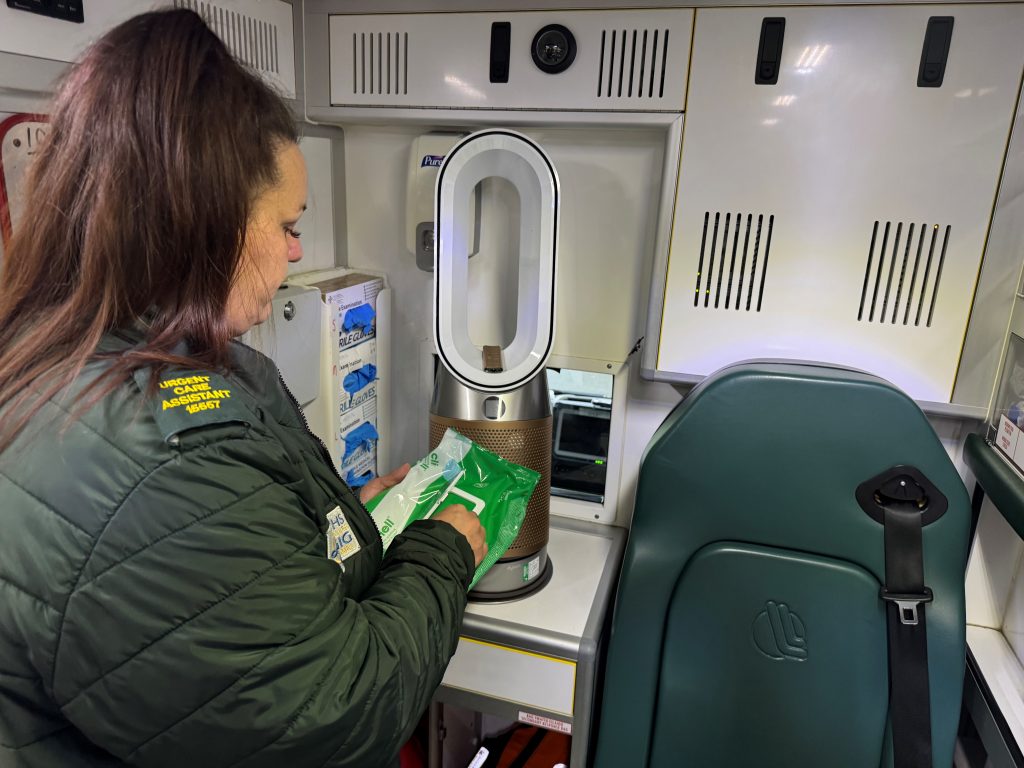
Paramedic in back of ambulance with fan in operation
Photo credit: Welsh Ambulance Service.

The Welsh Ambulance Service is taking a green first approach to keeping its staff and patients warm in the back of its ambulances by investing in fan heaters that don’t need the diesel engine running to operate when the temperatures plunge during the winter.

Ambulance engines normally have to remain switched on to keep essential equipment running and for warmth, but the newly-procured bladeless fan heaters mean engines can now be switched off, reducing diesel emissions. Power comes from attaching the ambulance to an outlet via a 230volt shoreline cable.

“The well-documented pressures across the system mean that some patients spend a considerable amount of time in the ambulance before handover to the emergency department. 

“In turn, that means both patients and staff can be exposed to diesel emissions for long periods of time, which is clearly very unpleasant and absolutely not the experience we want anyone to have.”

Liam Williams, Director of Quality and Nursing, Welsh Ambulance Service.


Investing in the multi-functional bladeless fan heaters from Dyson that have the ability to heat and cool, as well as capture airborne dust, allergens, odours, bacteria and other pollutants, is all part of the service’s commitment to reduce its diesel fumes and its overall environmental impact. The Welsh Government is aiming for a carbon net zero public sector by 2030, and for Wales to become carbon neutral by 2050.


Read more about how ambulance services are working to reduce emissions from fleet – Ambulance service launches new study to investigate air pollution exposure among crews.

Net zero Sustainability Transport Welsh Ambulance Service
Share. LinkedIn Twitter Facebook Email

Catherine Levin

  • View LinkedIn profile

Catherine writes and commissions content from across the emergency services as well as interviewing senior leaders. She also hosts our webinar series exploring timely topics with a range of speakers.

All articles by Catherine >

Stay informed

Sign up for our weekly newsletter with news, views and more.

Published by
Ninteen
Quick links
  • Privacy Policy
  • Cookie policy
  • About
  • Back issues
  • Contributors
  • Contact
In assocation with
The Emergency Services Show
The Emergency Tech Show
Certifications
The Emergency Tech Show
LinkedIn Instagram
  • Privacy Policy
  • Cookie policy
  • About
  • Back issues
  • Contributors
  • Contact
© 2026 Emergency Services Times.

Type above and press Enter to search. Press Esc to cancel.

Login