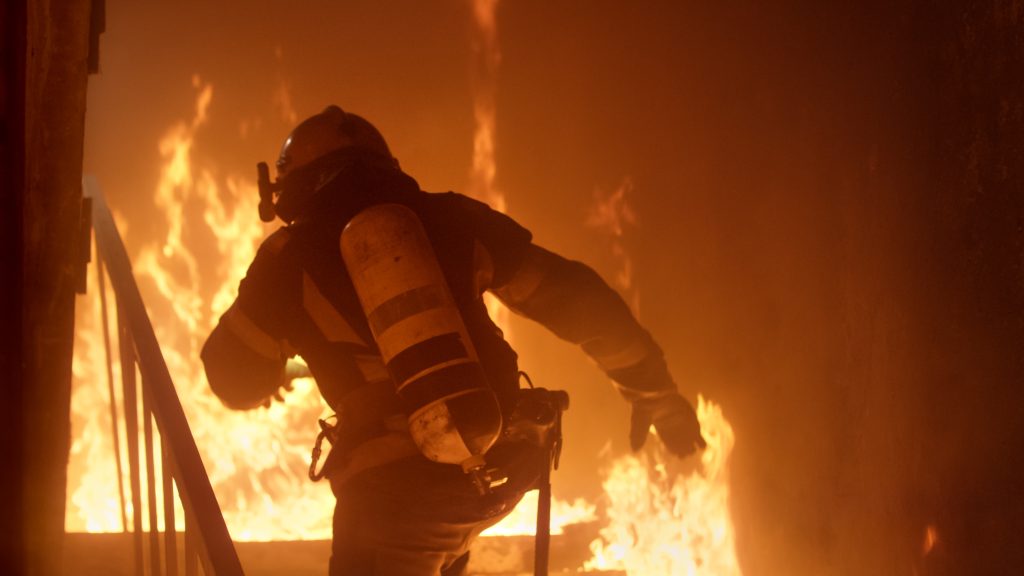
UK fire and rescue services have identified lithium-ion battery fires as one of the fastest-rising causes of domestic callouts. Data shows a 46% increase in lithium-ion battery-related fires in 2023 compared to 2022, underlining how important it is for safety standards and detection systems to keep pace. For fire crews, housing providers and installers alike, this is a critical moment to assess whether current approaches are equipped to deal with these modern risks.
Understanding the unique nature of lithium-ion fires
Fires involving lithium-ion batteries behave very differently from more familiar types of domestic fires. They can erupt suddenly, reach extremely high temperatures in seconds, and emit toxic gases. Unlike traditional fires, there’s often no slow build-up of smoke or heat – just a sudden onset of flames caused by a process known as thermal runaway, which is a chain reaction that occurs within a lithium-ion battery when it becomes mechanically damaged, electrically overcharged, or subjected to elevated ambient temperatures.
For firefighters, this presents major challenges: unpredictable flare-ups, the release of highly toxic smoke, and the potential for re-ignition. These differences underline why both prevention and detection are so vital.
Fires are likely to start during charging, especially with non-genuine or damaged chargers, and tend to occur in locations like bedrooms, hallways or garages. These areas are often out of sight or used during nighttime hours, making early detection even more crucial.
Installing smarter fire safety solutions
To counter this threat, it’s essential that detection systems are specified with these modern fire risks in mind. Heat alarms, in addition to traditional smoke alarms, should be considered in rooms where charging commonly happens, such as utility spaces, garages, and bedrooms.
Interlinked alarms offer another layer of protection. If a fire breaks out in a remote part of the home, an interconnected system ensures the alarm sounds across all areas, giving everyone more time to react. This is especially important in larger homes or multi-occupancy properties, where a single alarm might go unnoticed. For retrofit projects or where wiring isn’t practical, battery-powered interlinked alarms provide an easy-to-fit and cost-effective solution.
Combining technology with awareness
While upgrading alarm systems is an important step, it’s equally vital to combine this with education. Installers, landlords and fire service community safety teams all have a role to play in highlighting safe usage and charging practices to occupants. Simple messages such as avoiding overnight charging, using only manufacturer-approved chargers, and not charging devices on soft furnishings can go a long way towards preventing serious incidents.
Where budgets and infrastructure allow, connected systems that enable remote monitoring are increasingly being explored by landlords and housing providers. These technologies can flag alarm faults, low battery warnings or even activation alerts in real-time, making them particularly valuable in homes occupied by people at higher risk, such as the elderly, those with mobility issues or tenants with additional support needs.
Staying ahead
The risk of battery fires is only expected to grow as more households adopt electric transport and battery-powered devices. For the fire sector, this means not only preparing crews for the unique challenges of lithium-ion incidents, but also ensuring the right detection technologies and safety advice are reaching those most at risk.
Prevention isn’t just about fitting alarms, it’s about creating safer environments through awareness, education and the use of interconnected, modern detection systems. By working together, fire services, landlords and installers can reduce the likelihood of incidents and save lives.
For more information on FireAngel and its advanced range of fire and CO safety solutions, please click here.
To read similar articles, check out our Products channel.