


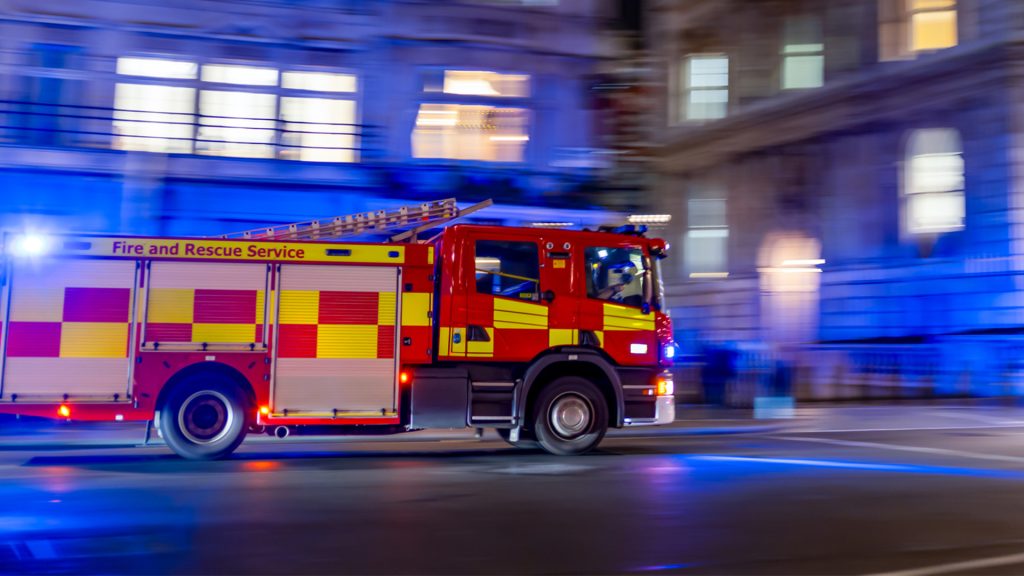
Emergency services across the UK and Europe are at a crossroads. Legacy systems such as TETRA have served reliably for decades, but they cannot support the broadband capabilities modern responders now require. The shift to 4G and 5G cellular networks promises real-time video, instant database access and priority communications. The UK’s planned Emergency Services Network (ESN) represents one example of this broader industry migration to broadband-enabled public safety communications.
Agencies cannot afford to wait. Vehicles are already acting as mobile command centres, and the demand for robust broadband grows daily.
A unified broadband vehicle network
Modern emergency operations increasingly rely on bandwidth-intensive applications – from streaming high-definition video feeds to supporting real-time mapping and AI-powered analytics. Professional routers deliver the high-performance 5G and WiFi 6 capabilities needed to handle multiple data streams simultaneously, enabling crews to leverage advanced technologies without connectivity bottlenecks that could compromise response times.
These demanding applications run across a growing array of connected equipment – laptops, bodycams, dashcams, sensors and radios. Managing each device with its own connection is costly and complex. A professional router unifies everything under one secure data plan, keeping every device online, while simplifying IT oversight.
Ultra-reliable communications in critical moments
Consumer-grade connectivity devices often fail under pressure – overheating, losing power, or dropping connections when they’re needed most. By contrast, purpose-built routers are ruggedised to withstand heat, cold, humidity, vibration and continuous use.
Equally important, they deliver multi-network connectivity. Modern routers can access multiple cellular networks, WiFi and even satellite links, switching intelligently to whichever path delivers the strongest connection. For responders, this means no interruptions, even when a single network is congested or unavailable.
Superior connectivity where it matters most
Embedded antennas within devices that are in enclosed spaces struggle to maintain good connections, especially when compared with roof-mounted industrial antennas, which is why smartphones, laptops or other consumer devices generally struggle in ambulances and fire engines. Professional routers pair with high-gain rooftop antennas, providing stronger, more consistent coverage.
As broadband networks become the standard for public safety communications, cellular routers will also take advantage of priority and pre-emption features, enabling first responders to get the bandwidth they need – even during crowded public events or major incidents when civilian networks are overwhelmed. A real-world example comes from Derbyshire Fire and Rescue Service, which has deployed AirLink vehicle routers to provide crews with real-time situational awareness. Live video from the scene improves coordination and speeds response, showing the tangible benefits of professional connectivity.
Public safety-grade security and centralised management
Public safety agencies handle some of the most sensitive data imaginable. Purpose-built vehicle cellular routers can offer the end-to-end protection emergency agencies require: firewalls, management data encryption, network segmentation and secure VPNs.
Remote cloud-based management platforms, such as AirLink Management Service (ALMS), allow IT teams to monitor and update entire fleets remotely. Firmware and security patches can be deployed over the air, keeping systems current without taking vehicles off the road. The result: reduced downtime, stronger cyber resilience, and less burden on stretched IT departments.
Integrated fleet intelligence
Connectivity is only the beginning. Today’s advanced cellular routers double as fleet intelligence hubs, providing real-time GPS location data, driver behaviour insights, and integration with fleet management platforms. This enhances safety, supports compliance, and enables smarter resource allocation – turning a connectivity investment into a multi-purpose operational tool.
Preparing today
The ESN rollout may still be years away, but as broadband networks become the standard for public safety communications, forward-looking agencies are acting now. By adopting purpose-built vehicle cellular router solutions, they’re modernising operations, improving safety and enabling a seamless transition to broadband-enabled public safety.
To read similar articles, check out our Technology chanel.
