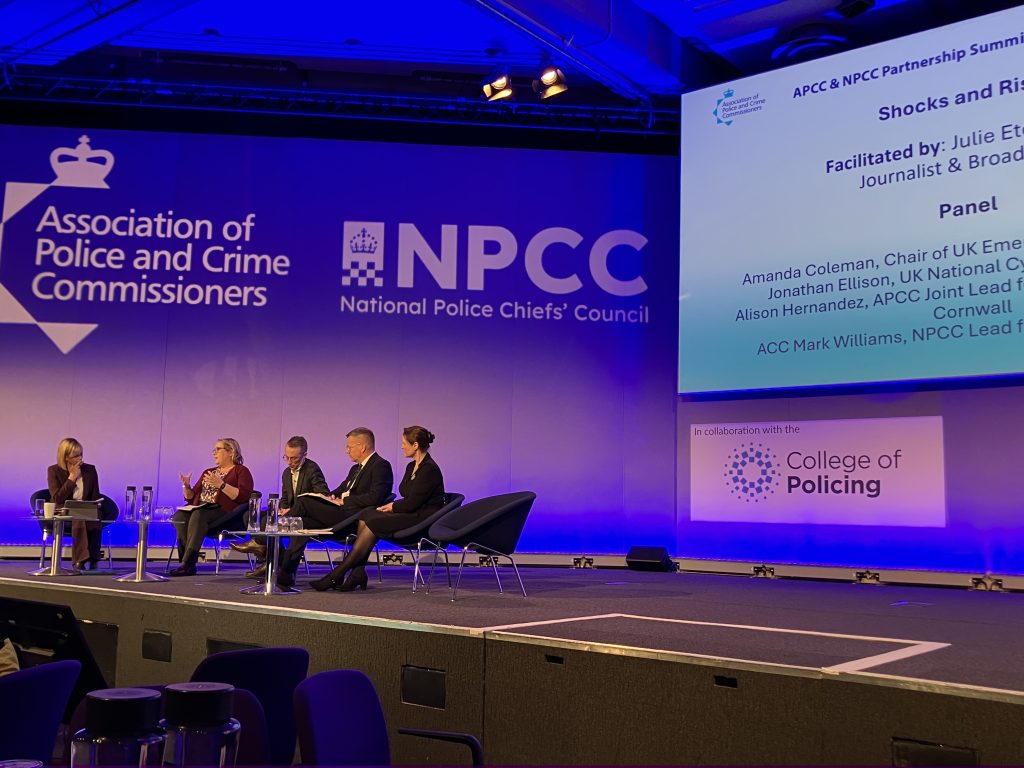
Reflecting on this year’s police chiefs’ conference, its clear to me that the same conversations about doing more with less, improving productivity and maximising the use of technology are still taking place and this hasn’t changed since I left the sector six years ago.
There are nuanced changes, inevitably in the technology space. Technology now is about artificial intelligence and how it can be used back in the 2010’s it was social media and digital developments. Productivity now has a slightly different flavour as we heard from London School of Economics policing productivity guru, Professor Tom Kirchmaier. He made some stark comments about the speed of change and development that is needed.
Communication has to be at the heart of making these changes and introducing new developments. The changing use of technology in policing at a time when public trust is being squeezed means the potential for rumour, misinformation, or a backlash is ever present. Introducing artificial intelligence tools makes sense but people need to be confident how it is being used, for what purposes and importantly what benefits it brings.
It is vital to avoid just talking at people and instead the communication has to be built on active listening to people.
What are their concerns? Why are they feeling that way? What do they need and expect? Understanding this can then underpin the decisions about when, how and in what ways to communicate. Just providing more simple communication is not going to have the necessary impact on what people are feeling. It can become like being unable to speak another language and instead of learning how to we just speak slower and more loudly.
Of course, doing that grounding work before launching into communication activity requires the necessary resources being in place. If police communication teams are just busy with all the immediate demands, they will be unable to do the work required.
The conference hall did feel a little different than six or more years ago. There were more women in the audience but there was still an obvious lack of diversity. Middle aged, white men in suits were the majority in the room. It was a visible representation of the fact there is still a lot more work required to have diversity not just in the police service but importantly at the top in police leadership roles. Police and crime commissioners in the room were also still coming to terms with the sudden Government announcement a few days earlier that will seem them abolished from 2028.
There is no doubt that PCCs have in many places have made a huge impact. It will be essential to ensure that whatever changes are made don’t lose sight of the important work to support those affected by crime and the work on tackling domestic abuse and violence against women and girls. This is one change that feels as though it is happening really quickly.
I left my time at the conference seeing huge opportunities for policing to change, develop and adapt so that it can help communities become safer and also build trust. But it needs to happen at speed to keep up with the pace of change in society, and it must have an open approach to develop meaningful communication.
Read more about the conference with coverage of PCC Emily Spurrell’s speech – Changes to police governance risk ‘chaos’ say PCCs.