


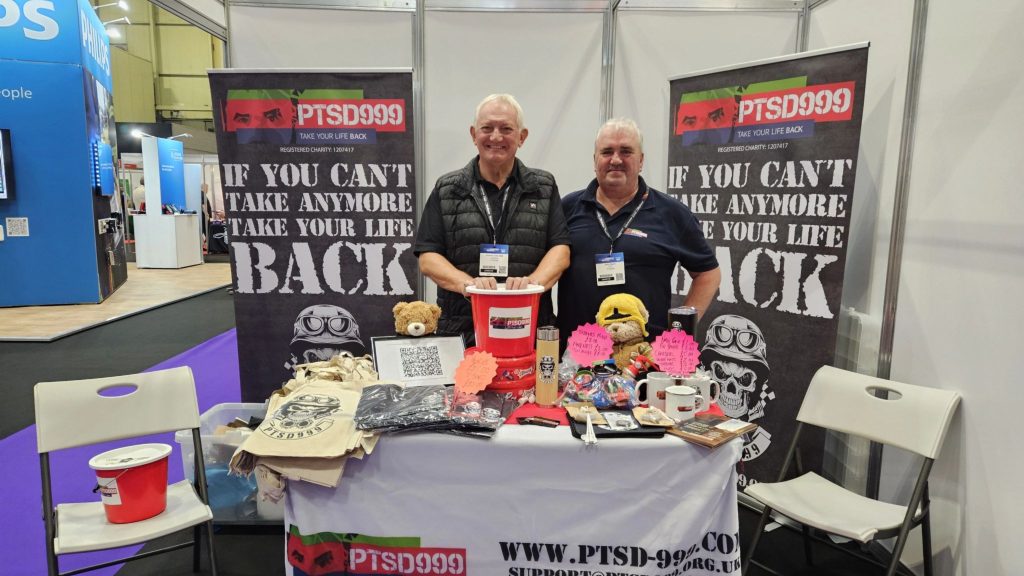
A lack of structured support, a culture of silence, and the cumulative toll of repeated trauma: these are the realities that led Gary Hayes to found PTSD999. A former soldier and police officer diagnosed with complex PTSD after years on the frontline, including attending the 7 July 2005 London bombings, Hayes now uses his experience to support others across the emergency services.
Reflecting on his own career, he describes an environment where there was little opportunity to process what crews were exposed to, with staff moving rapidly from one incident to the next. “There was no support. It was just ‘get on with it’,” he says, a culture that left many carrying the weight of trauma without the tools to manage it.
That impact did not stay at work. Like many in the emergency services, Hayes struggled to recognise how deeply his experiences were affecting his personal life, with frustration, guilt and emotional strain spilling over at home. “I put the family through an absolute misery without even realising it,” he says.
He also highlights the coping mechanisms that often follow, including drinking, gambling or other addictions, describing them as ways of masking the underlying issue rather than addressing it. “All you’re doing is masking the actual problem.” This understanding has shaped PTSD999’s approach, which considers not just the individual, but the wider impact of trauma on families and relationships.
Hayes set up PTSD999 in 2015, and quickly recruited Graham Cole OBE, famous for his role as PC Tony Stamp for over 21 years in The Bill. His involvement as the charity’s president, Hayes believes, has increased the charity’s reach. “People will automatically come and want to have a chat and a photograph with Graham, because he’s that bloke off the telly, but equally, he’s like a conduit for a lot of people. He breaks the ice,” he tells me.
Cole and Hayes regularly have a stand at The Emergency Services Show, which Hayes sees as a huge opportunity for outreach to frontline staff who may be struggling to voice their feelings. “We benefit from the show every year. It’s a great meeting point, and it’s a bit of a leveller because of who attends and all their different experiences. It’s a massive positive for us.”
A key barrier to seeking help, Hayes argues, is trust, particularly within organisations. Many frontline staff remain reluctant to speak openly about their mental health, fearing they will be perceived as weak or that it could impact their role, progression or specialist status. In contrast, PTSD999 is built around lived experience, offering support through conversation rather than clinical process. Hayes explains that simply being able to talk to someone who understands the realities of the job can make a significant difference. “We just sit and listen… we’ve had similar experiences,” he says. That relatability helps break down barriers quickly, allowing individuals to open up and feel less isolated in what they are experiencing.
This approach is reflected in the organisation’s training, which Hayes describes as direct, honest and grounded. Rather than relying on complex medical language, sessions use real-life examples and straightforward communication to help staff recognise the signs of trauma in themselves and others.
He says many attendees begin to connect the dots for the first time, recognising behaviours or feelings they may have previously dismissed. “They’re recognising something within themselves or a colleague,” he explains. While few are willing to speak in front of peers, the response afterwards is telling, with long queues of people seeking one-to-one conversations once the session ends. “I’ll have 98 people queuing up wanting to have a personal chat.”
“I get phone calls, text messages or emails simply saying, ‘thank you for saving my life’.”
Gary Hayes
Hayes is quick to emphasise that the real step is taken by those who reach out. “They’ve done the hardest part,” he adds, reinforcing the idea that starting a conversation is often the most difficult but most important step.
Despite this progress, Hayes believes more needs to be done at an organisational level. He argues that earlier intervention, particularly during training and throughout a person’s career, could help reduce long-term mental health issues and keep experienced staff in frontline roles. However, he notes that financial constraints are often cited as a reason for not investing in this kind of support. “All I hear now is, ‘there’s no money in the training programme’,” he tells me, urging services to prioritise mental health in the same way as physical safety.
Over 70 police officers have died by suicide since 2022, with 236 further known attempts, and as a result the National Police Chief’s Council has announced that it will be pressing government to introduce a clause into the Crime and Policing Bill to implement a consistent, mandatory suicide reporting requirement through the Chief Medical Officer for policing, as well as introducing a national system for training and psychological assessments.
Frontline staff who are suffering may not initially want to reach out to charities like PTSD999, but Hayes advises them to take pride in what they do, recognise the impact it has, and don’t face their challenges alone. “Just talk. It’s probably the biggest and hardest thing you’ll ever do,” he says. Whether that conversation is with a colleague, a loved one or an organisation like PTSD999, he believes it can be the turning point.
“If you can’t talk to your employer, give us a call.”
Gary Hayes
You can find out more information about the charity on their website, including how to get in touch with them or book training for your organisation.
PTSD999 will be exhibiting at The Emergency Services Show 2026, taking place from 16-17 September at the NEC in Birmingham. You can find them on Stand CZ18. Register your interest to attend here.
To read similar articles, check out our People and skills channel.
