


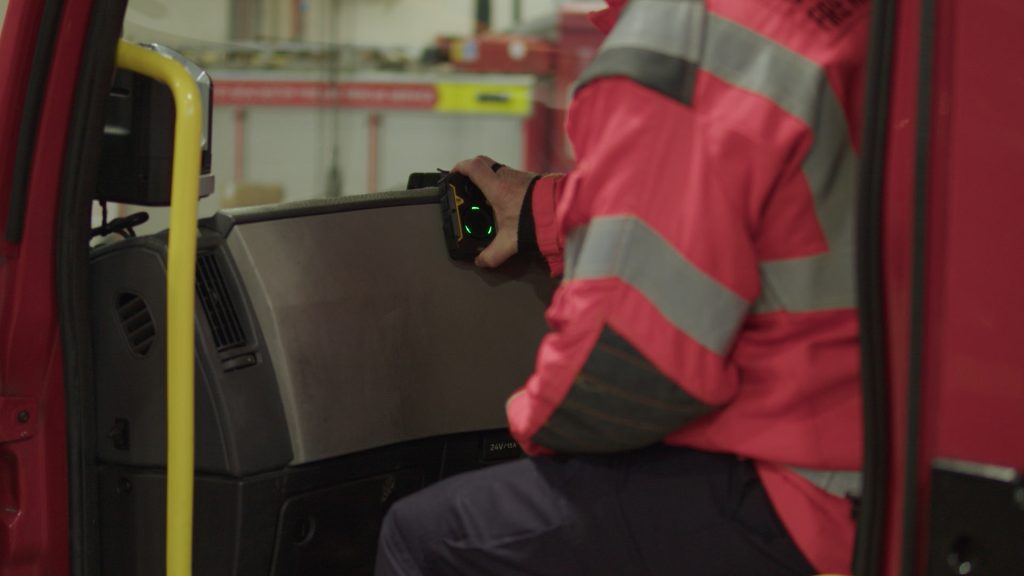
Innovation in the fire and rescue service comes from many different places but in this case, it comes from policing. Body worn video (BWV) is used extensively in policing, with Police Scotland one of the last forces to adopt it in recent years. The fire and rescue service is now starting to introduce it, with Greater Manchester Fire and Rescue Service (GMFRS) forging ahead and equipping all its frontline officers with this capability.
Station Manager Mike Lord is the BWV lead at GMFRS, he says BWV will improve both officer safety and operational effectiveness. He is hugely enthusiastic about the product having managed the procurement of the technology and will oversee the roll out of 233 body worn cameras from Axon.
It’s been a two-year process that means ultimately every officer (from Station Manager upwards) will have one along with every appliance and the Incident Command Academy to ensure it’s integral to training. Staff working in fire prevention and fire protection roles will also have access to BWV.
The driver for this change stems from the Manchester Arena attack nine years ago where 22 people were killed. Dave Russel talked about the impact this had on GMFRS in my interview with him. He started work as Chief Fire Officer the day that the inquiry into the attack began its work under the leadership of Sir John Saunders.
The subsequent report, that laid bare the failings of GMFRS in 2017, included a recommendation (number 84) to improve the way the service recorded what frontline staff saw and what they did during incidents. He wanted to see better decision logging on the incident ground.
Like policing, there are governance processes in place to protect privacy and determine access to BWV footage. Mike stresses how important it was to be robust about the process and to involve stakeholders – including the Fire Brigades Union – from the start. With the data privacy statement (DPIA) signed off in GMFRS, he says that it can be a blueprint for other services in the North West to adopt as they look to roll out the capability.
Ten super users in GMFRS will monitor, assure and ensure training works and policy is followed – only those who need to view footage can access it and the data trail provides the evidence of usage.
Collaboration has been at the heart of this project with a national working group overseeing the adoption of this tech and a lot of learning is being shared along the way. Norfolk Fire and Rescue Service has c.160 cameras in use and other services are all at varying stages of implementation. It looks ripe for a national procurement and a national standard for adoption.
The cameras are ruggedised meaning they will work in the tough environment of the fire and rescue service. The reasoning for putting them on officers is because while they are fully involved in the incident, they also take a wider view of what is going on and the BWV can capture that perspective.
He shows me BWV footage of a wildfire where the officer has started recording and it was streamed back to incident commanders so they can have better situational awareness. It also becomes useful material for debriefing the incident afterwards and could contribute to training material in the future.
The sharpness of the video footage is impressive and with a battery life of around 12 hours, the cameras can be used for long-duration incidents like wildfires, although they can be charged on the appliance if necessary.
Mike says they have taken a commonsense approach to the policy about how the BWV should be used. He explains:
“The expectation is that once you turn out, the officer will start recording when they get off the appliance. From the smallest part of an incident to detail involved in a major incident, we don’t want to miss the opportunity to gather footage and evidence of what we did in our response.”
It’s still early days as the roll-out continues, it’s a pragmatic approach that recognises the challenge of issuing over 200 cameras and the associated training to a service that serves a huge geographical expanse. Reflecting on the police experience of introducing BWV, Mike thinks that it will take a while to bed in but once it does, it will become business as usual equipment.
From innovation to day-to-day, it’s a new tool in the box for the fire and rescue service and with safety at its heart, it will make a difference to response and learning from incidents, which is exactly what Sir John Saunders intended.
Mike will be speaking about body worn video when he joins Andy Nash from Norfolk Fire and Rescue Service at The Emergency Tech Show on 16 September. Register to attend here.
