


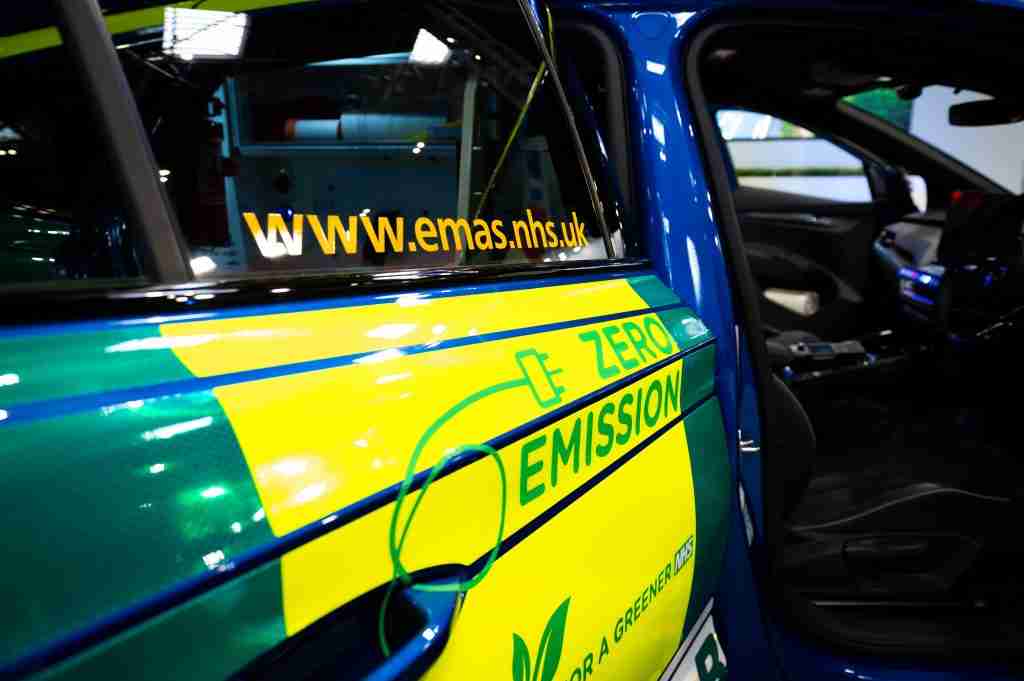
The deadline to end sales of diesel and petrol vehicles in the UK may seem a long way off, but well ahead of 2035, fleet managers in all emergency services are working hard to ensure staff have the right vehicles to do the job and reduce emissions along the way.
At a recent gathering of fleet managers hosted by Greenfleet, there was plenty of expertise on hand to guide the transition. Here are the five standout steps to getting there.
Number one: sort out rapid charging. ‘Rapid charging is a time and money sink,’ according to one of the speakers, so getting plenty of places to do the charging on and off the emergency services estate is critical.
The Office for Zero Emission Vehicles reports that there are 57k public charging points across the UK with an ambition to increase this to 300k by 2030. These public charging points will be helpful to emergency service drivers when they are using smaller cars and need to charge while out and about, but they can’t rely on them and need their own charging points.
Which brings me to step number two on my list: collaboration. This is a key aspect of the way that the emergency services work but are they joined up when it comes to planning infrastructure for an electric fleet? Discussion at Greenfleet centred around commercial sites allowing the public to use their chargers but that is mired in all sorts of problems, not least cost and security and won’t work for the blue lights. Could a fire service allow an ambulance service to use its chargers? Some may already do that but the issue of charging – the financial kind – remains.
On that collaboration point, there is the longer term issue about joined up planning for putting the chargers into the emergency service estate in the first place. It seems to make sense that if you’re working out where to put your chargers – hopefully by using data to map out demand, routes and emissions – you’d have a word with your opposite number in the other blue lights on your patch to see if you can jump on their plans, adapt yours or even plan together.
Step number three may be controversial: rethinking operations as a result of moving to electric vehicles. I spoke to one police fleet lead about this point and he said that the way that his organisation operates will have to change because if electric powered high performance police cars – the ones that go super fast – can’t do the top speeds they can now, they’ll have to react differently and that has to affect outcomes.
Another example I heard was of incidents that require vehicles to be on scene for long periods, how do they get charged? Should services be rethinking what vehicles get sent to incidents in the first place?
I wonder if there a tension between the green agenda – the need to reduce emissions to slow the effects of climate change – and the ‘we’ve always done it like this’ mentality that will hold back innovation in this space.
One solution to winning hearts and minds is by removing friction. What I mean by step number four is make it easy for staff to use an electric vehicle by simplifying the process of charging it. Give them a universal payment card that works in any or at least a lot of charging points. Buy cars that are great to drive. Test out lots and work out what works best for your staff. I hear about all sorts of trials going on and when I spoke to Billy Andrew from Police Scotland he said the same. Keiran Bromley from East of England Ambulance shared a similar story.
And of course, there’s the amazing story of the electric ambulance in London, where the paramedics love driving it because it’s super quiet in the back and they love the redesign that maxed out the space for their clinical needs.
Standout step number five has to go to leadership. I told the audience at Greenfleet that there hadn’t been enough discussion about buy in at senior levels. For the emergency services, that means officers and political leaders. The upcoming Police and Crime Commissioner elections are the perfect time for them to set out their green credentials and say they will invest in critical green fleet for police because reducing emissions is such a massive part of decarbonising our world.
To listen to more discussion about the emergency services move to electric, watch the webinar from Emergency Services Times on catch up.
To read similar articles, check out our Sustainability channel.
