


Life, as we all know, can throw curveballs. One minute you’re planning your weekend, the next there’s a knock at the door and a firefighter is asking you to leave.
That’s what happened in Plymouth last year when builders dug up a huge, unexploded WWII bomb. It had been sitting there quietly for more than eighty years. Within hours, more than 10,000 residents around Keyham had been evacuated in a coordinated effort by the police, emergency services, military and local authorities.
One of the fastest ways people were told to leave the area was via the UK’s Emergency Alerts system. Within seconds, a short, clear instruction appeared directly on phones in the area. “…a time limited cordon will be in place along [the route] between 2pm until an estimated 5pm. You are asked to leave and stay away from the cordoned area for this time period.” For many, that alert was the first they knew of the danger, and it reached them with ease.
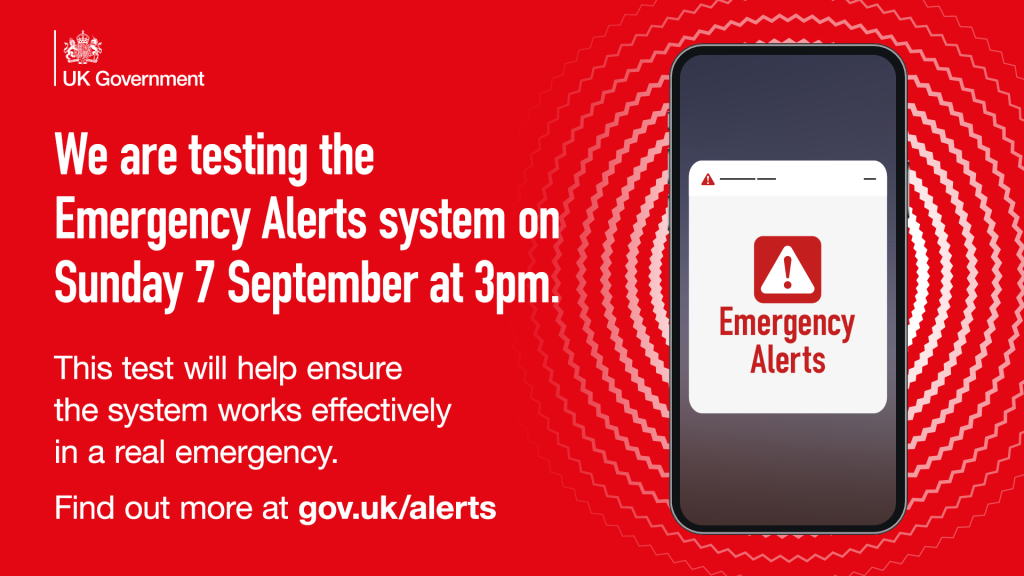
On Sunday 7 September at around 3pm, you’ll experience this system for yourself when we run the second nationwide test. Your phone will vibrate and play a loud, siren-like sound for around ten seconds, along with a message explaining it’s just a test.
The idea is straightforward. In a real emergency, be that severe flooding, a wildfire, or another public safety incident, we can reach millions of people within seconds, wherever they are. Other countries have used similar systems for years. In Japan, it’s part of everyday life where the public stay alert to the risk of earthquakes and typhoons. Think of it as a national smoke alarm.
You hope it never needs to sound for real, but you want it to work when it does.
There’s an important safety consideration too. For victims of domestic violence, Emergency Alerts can reveal the location of concealed phones, so we have been working with campaigners and charities to raise awareness about how to opt-out. If that applies to you, you can opt out on that device in under a minute by visiting gov.uk/alerts. Earlier this week, I visited Refuge, the UK’s largest domestic abuse charity, to meet with survivors and campaigners first-hand.
For everyone else, this is a good moment to think ahead. If the alert came because of flooding, where would you go? If it was a wildfire, who would you check on? Would you need medication, children’s school things or pet supplies? As Parliamentary Secretary for the Cabinet Office with responsibility for national security, I’ve seen first-hand how valuable it is to have a system that gets life-saving information to people when it matters most. My message is that this isn’t about living in fear – it’s about being prepared.
On 7 September, when your phone suddenly springs to life, think of it as a brief interruption or a quiet reassurance. If something serious ever happens near you, the message will get through, loud and clear.
To read similar articles, check out our Leadership channel.
