


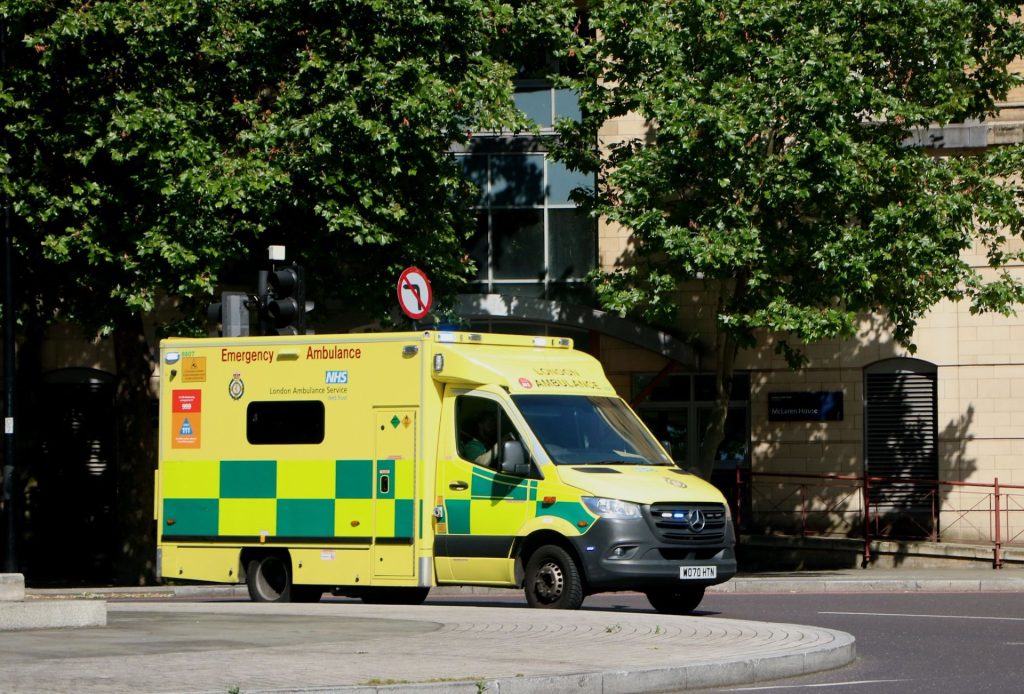
London Ambulance Service is trialling a new type of artificial intelligence that listens to conversations and generates clinical notes in the background. The aim is to give paramedics back time that would otherwise be spent typing, allowing them to focus on patients rather than screens.
The ‘ambient scribing’ pilot, developed with Tortus AI, began in telephone-based clinical hubs before expanding to frontline ambulance operations. It’s still early days, but feedback from clinicians has been positive: lower cognitive load, less worry about spelling or structure and more uninterrupted attention on patients.
“This has allowed us to go back to the stuff that we love, which is having a natural conversation with our patient and not being interrupted by the digital workflow.”
David Davis, Chief Clinical Information Officer, London Ambulance Service.
The pilot started by chance, funding via the national frontline digitisation programme brought Great Ormond Street Hospital and Tortoise AI together with the NHS London team. The ambulance setting then became part of the fourth phase of testing, a real-world stress test for the technology.
Davis explained that paramedic work is notoriously challenging for note-taking. Calls can stretch long, get interrupted, and involve noisy homes, crowded emergency departments and multiple voices speaking at once. Trying to type while navigating that chaos can lead to lost detail and broken conversational flow.
“The technology can hear things you may have missed. It gives you that sense-check in long conversations.”
David Davis, Chief Clinical Information Officer, London Ambulance Service.
In practice, clinicians click to start a consultation and speak normally. At the end, they select a note template, check and amend the AI-generated note if needed, and paste it into the CAD or ePCR system. All processing happens in the UK and the transcript itself isn’t stored, only the final, clinician-approved note.
Davis explained that participation in the pilot was voluntary and a hands-on workshop allowed paramedics to try the model in a safe environment before live use.
Sarah Kirk, Senior Programme Manager, said the early focus was on transparency. “We wanted staff to understand what the technology was doing, how their data was processed, and the governance controls we had around it.”
The pilot is now running across London’s main clinical hubs. Beyond workflow improvements, the AI appears to have a subtle cultural impact, Kirk said that clinicians report feeling less stressed and more able to focus on patients.
Early conversations with staff revealed a common concern, the fear that AI would be used to push more through the system with fewer people. Both Davis and Kirk emphasised the opposite.
“This isn’t about replacing staff. It’s about supporting staff in their working practices.”
Sarah Kirk, Senior Programme Manager, London Ambulance Service.
Early results
The pilot numbers are still small and the business case isn’t final, but early signals are promising:
- Roughly 15% productivity uplift in clinical hubs
- Potential for improvements on the frontline
- Cost per case estimated between 30p and £1
Most importantly, clinicians report being able to focus better on patients, with less pressure from note-taking.
Looking ahead
LAS is preparing a full business case and expects to begin procurement later this year. Collaboration with other ambulance trusts is already underway to share learning. Davis said the ambition goes beyond simple dictation.
“This is the start of different record-making entirely – where clinicians can focus on patients, not screens.”
To hear the full session from The Emergency Services Show, listen to this episode on the For Every Response podcast.
To read similar articles, check out our Technology channel.
