


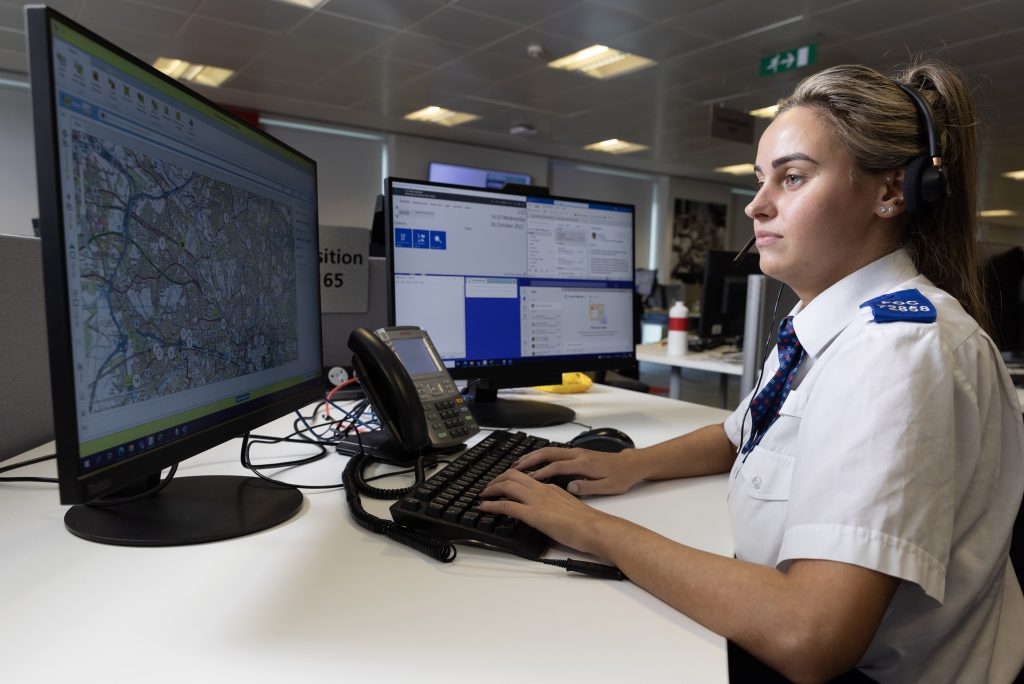
Responsible for managing resources and ensuring incidents are responded to quickly and safely, police dispatch operators play a critical role in coordinating the response to the most serious incidents. Here we shine a spotlight on dispatch operators working for Greater Manchester Police.
Police officers in Greater Manchester respond to the most serious incidents on average in under eight minutes – well inside the national standard of 15 minutes.
In the past year they were called to 141,000 grade one incidents – where an emergency risk to life has been identified – with an average attendance time of seven minutes and 49 seconds. A grade one incident is assessed as having an immediate risk to life and/or property, and dispatchers work to ensure an immediate response by officers.
They also responded to more than 111,000 grade two incidents. These are incidents that are deemed serious but without an immediate threat to life and are attended within the hour.
Every call is first assessed by highly trained call handlers, who gather vital information, assess risk and prioritise incidents in the Force Contact, Crime and Operations Branch (FCCO).
Once assessed, incidents are passed to dispatch operators, the unseen coordinators who ensure officers are deployed and respond where they are needed most across the force area.
In a 24‑hour period, dispatch operators can deal with up to 500 grade one emergency incidents and around 350 grade two priority incidents, highlighting the pace and responsibility carried by the role.
From routine deployments to major, fast‑moving incidents, dispatch operators maintain oversight of what is happening on the ground across the region. They monitor live incidents, update officers with new information as it becomes available, and continually assess risk as situations develop.
Working under pressure, dispatch operators make time‑critical decisions and provide vital support to frontline officers, helping to ensure the public receives the right response at the right time.
Where an incident response time is likely not to be met, dispatch operators have key responsibility for re-assessing the incident, performing service calls to members of the public to ensure they are safe, and to establish if there are any further notable updates that may exacerbate the risk – all with the public in mind to ensure they are safe.
With a focus on welfare
Dispatch operators also play a critical role in looking after the welfare of officers on the frontline, ensuring we know where our officers are, that they have enough officers at scene on an incident to safely deal, and securing them emergency back-up from other officers nearby.
They also have a key responsibility for liaising with partner agencies such as control room operators at North West Ambulance Service, Greater Manchester Fire and Rescue Service, local authorities, social services and partner forces to ensure that incidents are effectively responded to if it requires a multi-agency approach.
A demanding but deeply rewarding role
Andy Martin is a dispatch operator with more than 21 years’ experience in FCCO. He says that he’s seen the role evolve massively over the years but adds that the heart of it has stayed the same: supporting officers and keeping the public safe.
“What I love most is seeing new people come in, find their confidence and grow into the role Knowing you’ve played a part in helping someone develop, while also making a real difference to incidents happening in real time, is something you never lose sight of. It still feels like a privilege to do this job.”
Behind every response, every deployment and every officer sent to an incident, FCCO dispatch operators are working tirelessly to keep Greater Manchester moving safely, proving that while they may not always be seen, their impact is felt across the force every single day.
Another operator, Tom McNish, who is three years into his policing career, highlighted the pace and sense of purpose that comes with the role.Every shift is different, he says. “You’re right in the middle of the action, assisting officers, solving problems and making sure the right decisions are taken quickly.” Working as a dispatch operator is intense adds Tom, but he says it’s the job he loves. “It’s intense, but that’s what I love, you feel part of the response.”
Note: this article originally appeared on the GMP website and has been adapted, with permission, for Emergency Services Times.
To read similar articles, check out our Frontline channel.