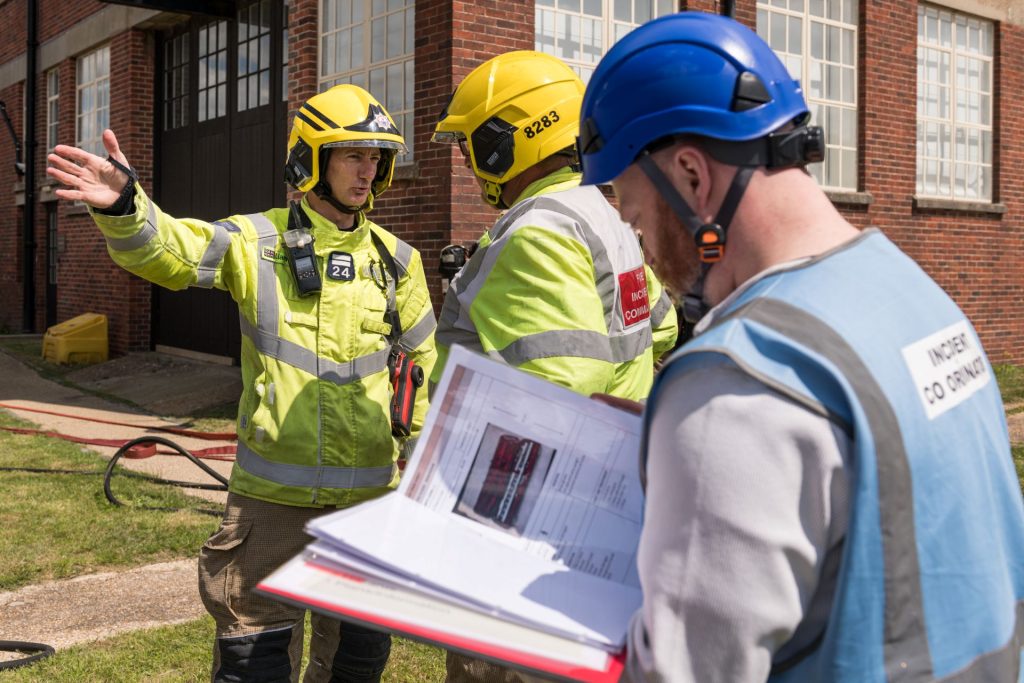
When fire strikes a heritage site, responders may have minutes to make critical decisions. Planning ahead can shape what survives.
A fire breaks out at a historic dockyard in the middle of the night. Multiple listed buildings are affected. Historic vessels are at risk. Nearby homes and businesses are disrupted. Fire crews arrive to a complex and fast-moving scene.
This was the reality at Underfall Yard in Bristol in 2023, an incident that demonstrated not only the devastating impact fire can have on heritage sites, but also the challenges facing emergency responders when historic places are involved.
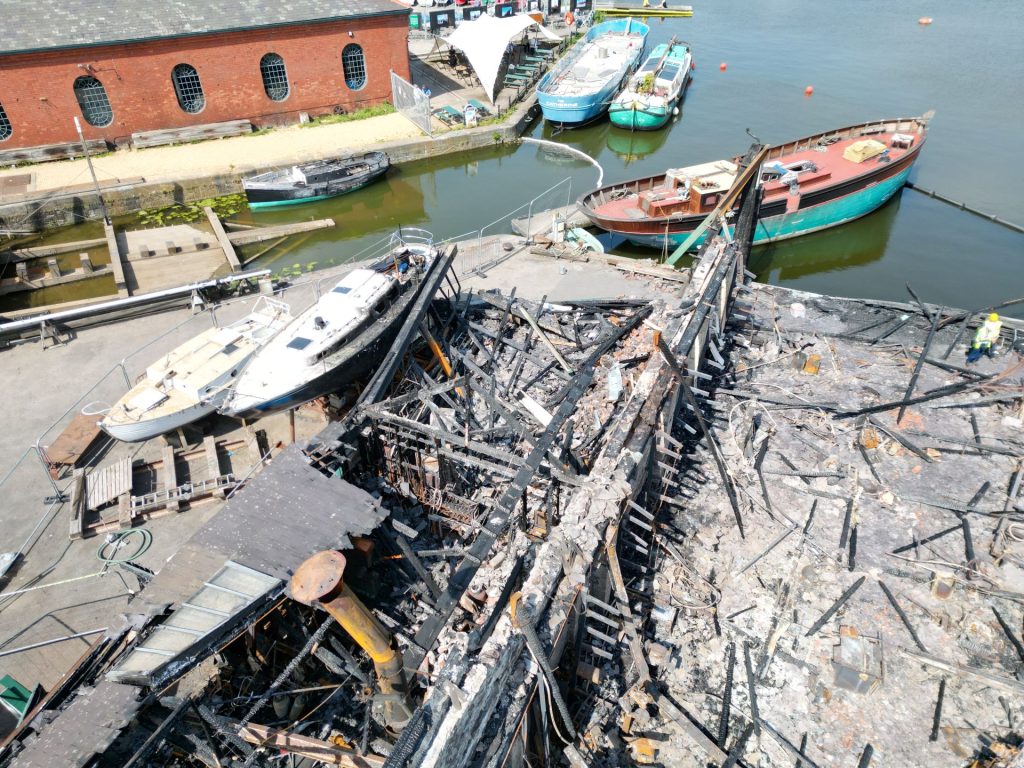
The fire was later treated as a serious criminal investigation involving close cooperation between Avon Fire & Rescue Service, Avon and Somerset Police, local authority partners and heritage specialists. Having caused millions of pounds worth of damage and destroying multiple historic buildings, the offender was successfully identified, charged with arson and intent to endanger life. They were jailed for life in November 2023.
For Historic England, incidents like this reinforce an important message: heritage fires are not simply conservation issues. They are incidents that affect public safety, local economies, communities and emergency services alike. And in many cases, the difference between damage and destruction comes down to preparation.
Why heritage incidents are different
Historic buildings can behave very differently in a fire. Complex layouts, hidden voids, historic materials and difficult access routes can all contribute to rapid fire spread and operational challenges.
At the same time, responders may also face difficult decisions about what can realistically be protected if conditions deteriorate.
Unlike many modern buildings, heritage sites often contain irreplaceable collections, historic interiors and archaeological material. Once lost, they cannot simply be replaced. This is where emergency planning becomes critical.
Planning before the incident happens
Historic England’s Emergency Planning and Fire Advice encourages organisations, owners and responders to think about these challenges before an incident occurs.
A Heritage Emergency Plan is not simply a conservation document, it is a practical resilience tool designed to support safer and more effective emergency response. Effective plans help organisations to:
- Identify risks such as arson, flooding and structural collapse
- Map vulnerable buildings, collections and access points
- Clarify decision-making and escalation routes
- Support fire and rescue interventions
- Protect important evidence following an incident
Importantly, they also help establish salvage priorities in advance.
In an emergency, it may not be possible to save everything. Knowing what matters most and how it can be protected safely, supports responders and site managers to make difficult decisions under pressure.
Where arson and heritage crime intersect
Historic England identifies arson as a significant and potentially preventable heritage crime risk, particularly for vacant, isolated or poorly secured historic buildings.
Deliberate fires can have consequences far beyond the heritage asset itself, affecting nearby communities, businesses and infrastructure, while placing additional demands on emergency services.
Historic England works closely with Police Forces, Fire & Rescue Services, local authorities and professional bodies including the Chartered Institute for Archaeologists (CIfA), to strengthen prevention, improve information sharing and support effective investigation where incidents occur.
From a practical perspective, prevention remains key. Measures such as improved lighting, site security, surveillance and community engagement can all reduce risk.
Supporting responders on the ground
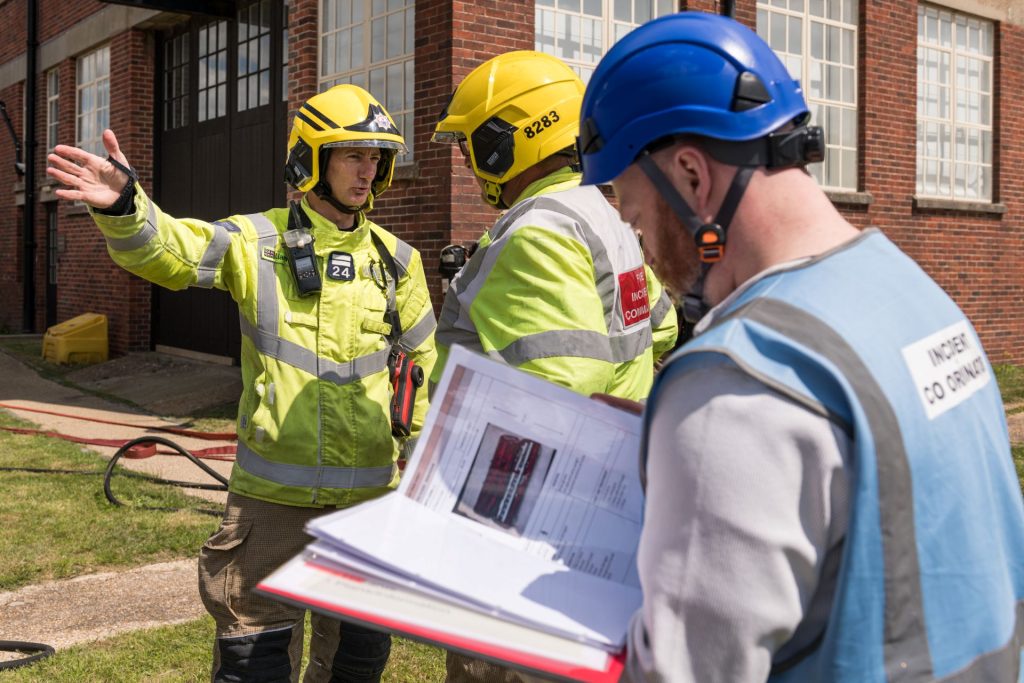
One of the most valuable aspects of emergency planning is the support it provides to responders during the first stages of an incident. Access to accurate site information, emergency contacts and salvage priorities can help crews make faster and more informed operational decisions.
Simple tools, including emergency information packs and site-specific plans, can make a significant difference when time is limited. Historic England and CIfA also provide guidance, training and practical resources to support emergency responders, investigators and heritage professionals dealing with heritage crime and emergency incidents.
Looking ahead
Historic England will be exhibiting alongside CIfA at The Emergency Services Show on 16-17th September at the NEC, Birmingham to highlight the importance of heritage crime prevention, including arson prevention, and emergency planning as part of wider national resilience. Come visit us at stand CZ40. Register for your free ticket here.
We would encourage category one responder organisations to engage with their local heritage sites now, to understand the risks associated with these sites, including arson, and familiarise themselves with any emergency response plans in place. Because when fire affects a heritage site, the challenge is not only how to respond, but how to prepare before the incident ever begins.
*This article was co-authored by Elizabeth Freshwater, Emergency Planning Adviser, Historic England and James Spry, Emergency Planning Team Leader, Historic England.
To read similar articles, check out our Frontline channel.