


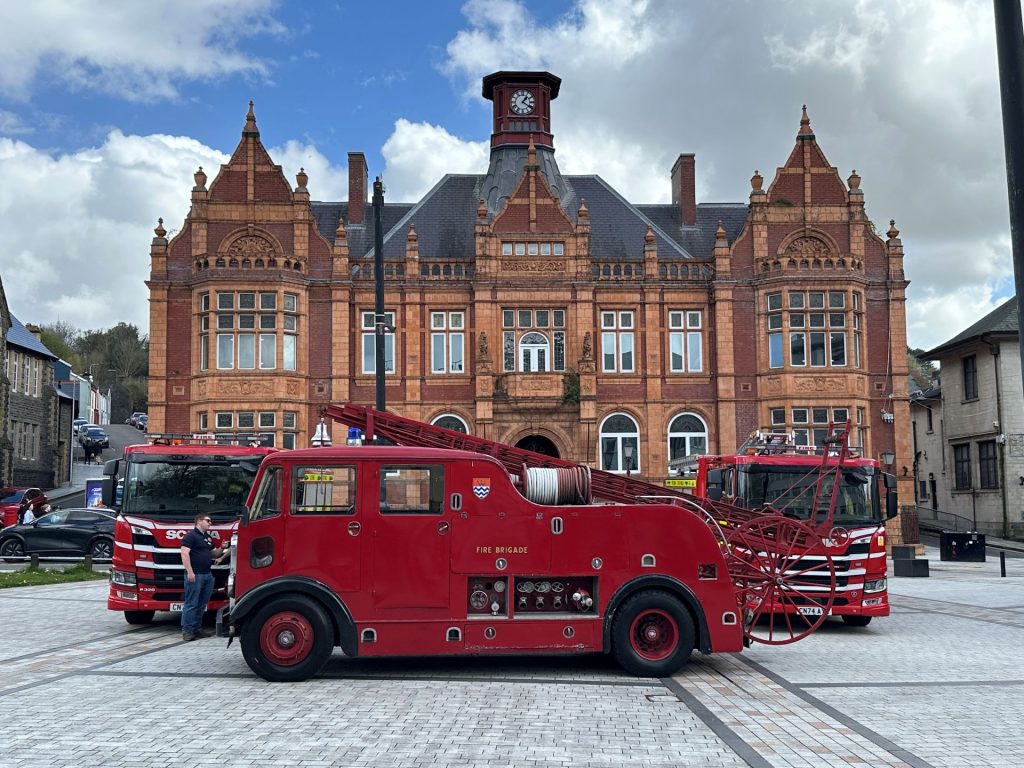
Sixty years after the Aberfan disaster claimed 144 lives, a handwritten letter from the fire chief who witnessed the response offers a glimpse into the challenges faced by those who rushed to help. As the community remembers the tragedy of 21 October 1966, South Wales Fire and Rescue Service is reflecting on how emergency response has evolved and how the lessons of the past continue to shape preparations for major incidents today.
For Matt Jones, Assistant Chief Fire Officer at South Wales Fire and Rescue Service, the anniversary is first and foremost about remembering those who died, their families and a community still affected by the disaster. Among the service’s historical records is a handwritten letter from the chief fire officer at the time, providing an insight into the response as it unfolded and capturing the determination of those who came together to help the community.
“Our thoughts remain with the community of Aberfan,” he said. “The anniversary is about remembrance, respect and ensuring the disaster is never forgotten.”
The handwritten letter offers a personal account of the response as it unfolded, helping preserve the experiences of those who were there and giving future generations a better understanding of what firefighters faced that day. Its significance extends beyond the history of the service, serving as a reminder of the human cost of the disaster and its lasting impact on Aberfan.
How disaster response has changed
The way emergency services prepare for and manage major incidents has changed considerably since 1966, with advances in equipment, communications and specialist capabilities transforming what responders can do when lives are at risk. Matt illustrated the difference by comparing the fire engines of 1966 with those used today, saying that beyond the basic similarities of wheels and a ladder, little is comparable.
Communications are significantly faster, while established arrangements for joint working help emergency services coordinate their response. The Joint Emergency Services Interoperability Principles (JESIP) support collaboration between services, enabling them to share information and make decisions together, while specialist capabilities such as urban search and rescue teams provide skills and equipment for complex incidents involving structural collapse.
Lessons learned from major incidents over the decades, including Aberfan, have helped shape today’s approach to incident management. “Aberfan is one of the significant incidents that we have always taken learning from,” Matt said. “That learning has helped shape the robust, resilient incident command system that operates between the three emergency services today.”
Despite the changes in operational capability, Matt stressed that the values underpinning the response remain the same, with courage, compassion and a commitment to helping communities as important now as they were in 1966. The equipment may have changed, but the responsibility carried by those responding to an emergency has not.
Preparing for the risks that remain
The lessons of Aberfan continue to inform how South Wales FRS assesses local risks, prepares for major incidents and works with partner agencies to protect communities. South Wales has a significant industrial heritage, and the presence of former mining tips means landslips remain an important consideration. The service works with partners to understand and manage these risks, with multi-agency plans and specialist capabilities in place should a significant incident occur.
Preparedness also depends on continually learning from incidents and testing how services work together before an emergency happens. The service invests in a risk-led exercise programme involving firefighters, operational leaders and control staff, allowing teams to practise their roles, test arrangements and identify areas for improvement. Structural collapse is one scenario crews prepare for, with firefighters trained in areas including confined spaces and recognising structural hazards, supported by national resilience urban search and rescue teams when specialist skills and equipment are required.
Matt tells me that the value of these exercises lies not simply in completing them, but in reviewing what happened and sharing the findings so that other services can benefit. “We spend a lot of time debriefing as well, so that we can capture the learning, but also share that learning nationally, so that other services can benefit from it,” he said.
That approach is increasingly important as the risks facing emergency services continue to evolve. Matt highlighted the challenges associated with climate change, including wildfires and flooding, alongside the potential for landslips in South Wales, while emerging technologies such as drones and robots are also helping shape thinking around future capabilities. “We must keep pace with society and risk as it continues to evolve, and that’s what builds our training and preparedness,” he said.
Supporting those who respond
Preparing for a major incident also means recognising its impact on the people who respond, particularly when they are faced with significant loss of life. Matt said staff wellbeing is a key priority for South Wales FRS, with support including debriefing and opportunities for colleagues to discuss the challenges they have faced, alongside help available through the Fire Fighters Charity for firefighters and their families.
The experiences of Aberfan are a reminder that the effects of a disaster extend beyond the immediate emergency, including for responders who may carry the weight of not being able to save lives. Supporting those people is an important part of ensuring emergency services are equipped to deal with the demands of their work.
Remembering Aberfan
As the community marks the 60th anniversary of the Aberfan disaster, a fire engine that was among the first to attend the tragedy has been restored by an individual and is now on display at Norfolk Fire Museum, providing a tangible link to the firefighters who responded in 1966 and a striking comparison with the equipment used today. Matt described seeing the historic appliance alongside a modern fire engine as a sobering experience, demonstrating how far technology and operational capability have progressed while bringing the service’s history to life for a new generation.
However, the anniversary is about more than measuring that progress. For Matt, it is an opportunity to ensure that those entering the fire and rescue service understand both the history of Aberfan and the responsibility that comes with serving their communities.
“Remembering allows us to reflect,” he said. “It allows us to reflect on the impact that day, how communities have changed, how the fire service has changed and how every emergency response has changed. But one thing that remains core is our role as a fire and rescue service, which is to serve and protect our communities.”
Sixty years on, the tools and techniques available to emergency services have changed dramatically, but the need to learn from tragedy, prepare for the unexpected and support communities through their darkest moments remains. Above all, Matt said, remembering Aberfan means remembering the 144 people who lost their lives and the community that continues to carry that legacy.
To read similar articles, check out our Frontline channel.
