


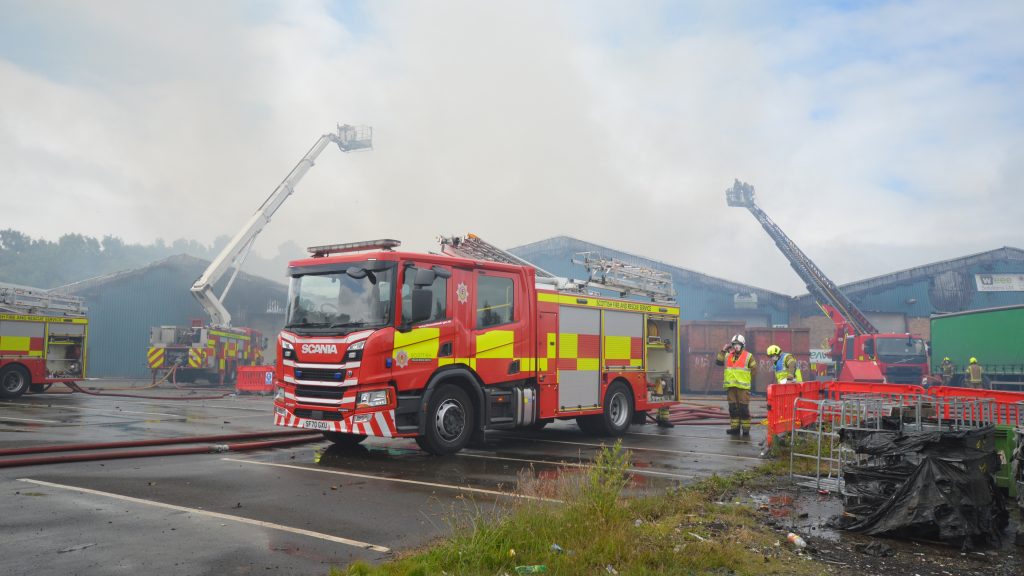
One of four themes for this year’s Emergency Services Show is Fleet of the Future. It sets out the breadth of the challenges facing emergency services to ensure they remain responsive, agile, compliant and cost effective when it comes to this important part of operational response.
It’s clear that a discussion about fleet is not just about the vehicle. It’s about the eco-system around it and how considerations about fleet are part of a wider strategic conversation that spans from technology, climate change, changing estates, operations and the evolution of the workforce to have the skills required to meet the challenges of a changing world.
Ijaz Bashir knows this all too well. He’s Head of Asset Management at the Scottish Fire and Rescue Service (SFRS) and he oversees a fleet of over 1,600 vehicles which are used across Scotland taking in terrain that spans from urban conurbations in Edinburgh and Glasgow to the sparsely populated rural areas in the far north of the country.
Adapting to climate change
“Our Strategic Asset Management Plan for Fleet was published in 2022 and it sets out a pragmatic decarbonisation path starting with light fleet and a low carbon appliance prototype.” Unpicking this position on the impact of climate change on SFRS, Ijaz explains that the ambition will, by 2030, see all of the light fleet made up of ULEV – ultra low emission vehicles – and supported by a charging infrastructure that keeps them on the road and available to meet the service’s needs.
“This is the fastest, most cost effective way to cut emissions,” he notes.
Heavy fleet – by that he means the fire engines or appliances – transition is on a longer time scale. “We are evaluating emerging zero-emission heavy technology while replacing legacy fire appliances with Euro 6 (EU emission standards for new vehicles) in the interim. We are making progress with our low-carbon appliance prototype and we are currently going through an operational evaluation process.” As part of this, the service is looking at operational behaviour change, including ways to reduce journeys, use the right vehicle for the right job and train for fuel-efficient driving.
On the specific point – and challenge – about charging low emission vehicles, it’s not just about making changes to the SFRS estate but looking to utilise what’s already out there. “External networks are important for our fleet of the future,” explains Ijaz. That means access to the commercial network from Allstar with its 77k+ chargers across the UK.
“We are growing the Blue Light ULEV charging network with Police Scotland and the Scottish Ambulance Service. We want to make prudent use of Scotland’s expanding public charging infrastructure funded by Transport Scotland.”
Reducing emissions by procuring green vehicles is only one aspect of climate change response that affects SFRS. The changing climate requires emergency services to adapt to the rising number of flooding incidents and extreme weather that has been seen in the extensive wildfires across Scotland in recent years. The strategic plan that underpins Ijaz’s thinking and approach highlights the need for a fit-for-purpose, modernised fleet that can respond efficiently and effectively to these risks.
He says that they are looking at thermal management and electrical robustness, allowing vehicles to operate in heatwaves that may required extended high-load operations. By that he means wildfires where the response can last for weeks and tie up resources for longer periods of time than has historically been the case. The fleet impacts extend to how well the vehicle can be protected from water ingress in flood conditions – that’s the batteries, the high voltage cabling all needing to be sealed and safe in challenging conditions.
Looking at the vehicle’s constituent parts in this way reveals a complexity that requires a joined up and thoughtful response that embraces both the need to use the best innovations from industry but also invest in the staff to have the skills to maintain the fleet, keeping it on the road and responsive to operational needs.
On that skills point, Ijaz highlights the need to ensure the workshop has the 24/7 capability to deal with the greening of the fleet, keeping up to date with targeted training and high levels of competence that reflects the changes in the technology. He adds that when they bring in new products, they ensure that training is built in to the procurement, with a competence-first approach baked in from the start.
Evolving use of AI to optimise fleet operations
Looking at the future of fleet, it is important to look at the role of artificial intelligence (AI) which Ijaz says offers “near-term, human in the loop opportunities that fit naturally on top of the capabilities that the SFRS is already using on the way to adopting.” He is excited about the work the service is doing so far around predictive maintenance, digital inspection and daily check apps that provide the data foundations that AI needs to thrive.
Today’s vehicles provide a wealth of data to help understand how they are being used and offer the chance to optimise capability as well as extend their shelf life. The use of telematics in emergency vehicles is not new and with real-time feedback it can provide SFRS with data to help cut fuel usage, reduce tyre wear and even more importantly minimise collision risk.
“This all builds on the goals set out in our Strategic Asset Management Plan for Fleet, where we are focusing on fuel efficient driving and enhanced driving,” explains Ijaz, emphasising the key document underpinning SFRS’s approach.
And what about the longer-term potential of AI in emergency vehicles? “Fully autonomous heavy appliances remain a way off operationally,” he says. “I do see that partial automation on the horizon. I’m thinking of things like automated scene lighting/deck operations, docking at charge points and autonomous hose reels. All of these can reduce task load and human error while keeping a trained crew in full control.” A safety first approach guides SFRS’s thinking about technology as it enables frontline operations.
Underpinned by quality assurance and standards
With a firm eye on innovation, SFRS is staying on top of vehicle technology developments with strengthened fleet processes aligned to ISO 9001 quality management standards across its workshops, where they are capturing data in the Tranman fleet management system. “We are taking advantage of the latest regulations and the industry standards,” explains Ijaz, acutely aware that the emergency fleet is small in the world of vehicles and that staying on top of developments in the wider transport industry is key to keeping the SFRS fleet fit for the future.
“We are using key performance indicators to track vehicle utilisation, downtime, safety inspections and emission reduction; these are just some metrics we are monitoring closely to benchmark progress and steer future investment decisions. These decisions rely on our data, our analysis and how we act on the insights we find.”
As the fallout from the cyber attack on Jaguar Land Rover dominated the headlines in recent months, all organisations will have taken a good look at their own cyber resilience. For SFRS, the assurance framework sets out how the principles of regular policy review and legal and regulatory compliance extend to cyber resilience for fleet systems, including telematics and diagnostic tools.
Ijaz explains that the assurance and controls extend to secure decommissioning of, for example, storage media in vehicles and chargers. It also embraces operational continuity to keep like-for-like reserves should systems be compromised and of course the all-important regular cyber security training which is mandatory for all staff.
Staff are, it is clear, central to SFRS achieving the ambitions set out in its strategic plans, whether that’s training for all staff about cyber awareness, looking at behaviour change of frontline staff to optimise the investment in alternative fuelled-fleet or a clear development plan for skilled staff in fleet workshops to ensure they maintain competence to keep the fleet agile and on the road. The fleet eco-system needs leadership and under Ijaz’s strategic direction, the fleet of the future for fire in Scotland is in good hands.
To learn about the themes for this year’s show, read Preparing responders for the pressures of modern emergency care and Emerging threats demand a new approach to resilience.
