


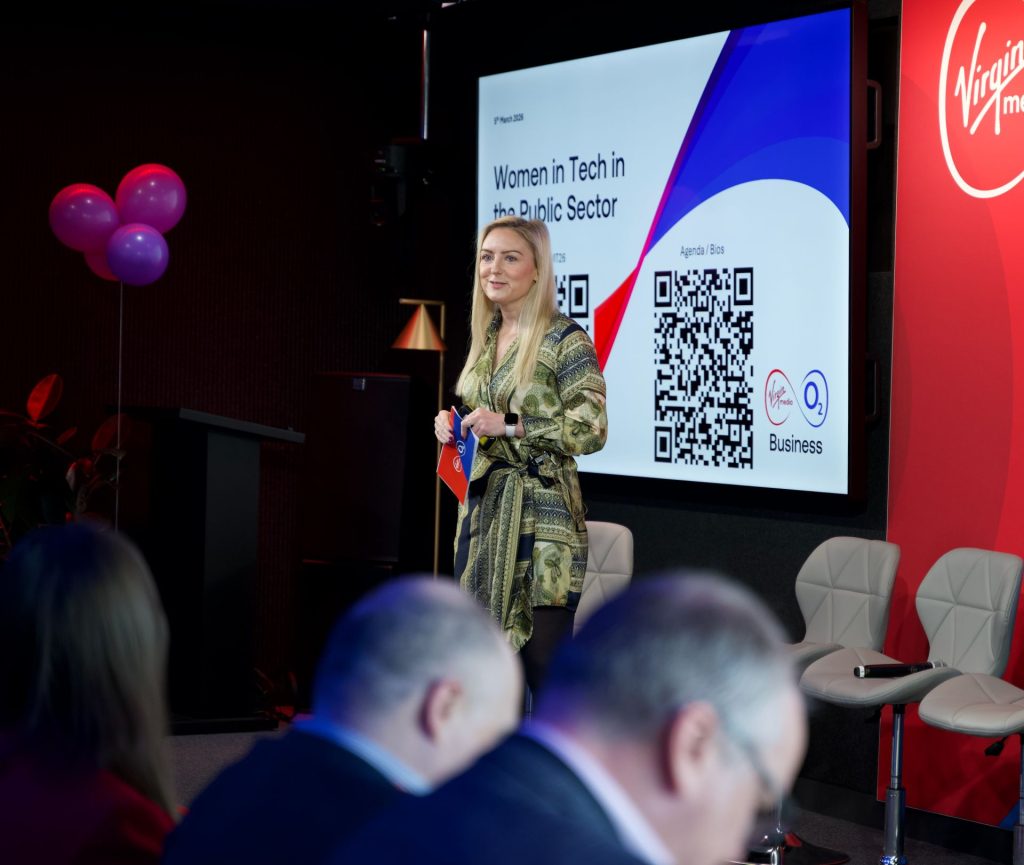
As public services face financial pressure, rising demand and rapid technological change, there is a growing need for people who understand both operational policing and the realities of digital infrastructure, data and commercial delivery. One of those figures is Charlotte Hails, Head of Public Sector Vertical Strategy at O2 Business, who will be speaking at this year’s Emergency Tech Show.
Charlotte spent nearly 17 years in West Yorkshire Police, including roles in counter-terrorism policing, before moving into the private sector. She joined what was then Virgin Media O2 Business as head of policing and justice, later taking on wider public sector strategy across the NHS, local government, and public safety and justice. She sees this not as a break with her past but as a continuation. “Policing is very close to my heart still,” she says. “I’ve come to feel that my private sector career is a continuum, not a separate one. You could say I’ve been working in and with policing for over 20 years.”
That dual perspective shapes her current work. Charlotte chairs the TechUK Justice and Emergency Services Council and has been involved in many areas of police technology strategy with the National Police Chiefs’ Council, Police Foundation and others. “Wherever it’s possible to get involved, I will,” she says, underlining her ongoing commitment to evolving how policing uses technology to improve public safety.
A consistent theme in Charlotte’s thinking is that technology should be judged on whether it improves service to the public and supports frontline officers and staff. “It has to have a real benefit on what they’re doing to serve the public,” she argues. “If it isn’t having a positive impact on that, then it’s not a worthwhile investment.” She is clear that financial constraints remain central and believes forces need to make more of their relationships with suppliers, build stronger business cases and show clearly where digital investment leads to better efficiency and effectiveness.
“One of the things that I talk about is making digital, data and technology everyone’s business,” she explains. In her view, senior leaders who set strategy need enough understanding of technology to make informed choices, rather than treating it as something to be left solely to specialists. Referring to a recent speech by Met chief Sir Mark Rowley, she says that headline topics such as AI, analytics and facial recognition cannot be separated from the less visible issue of legacy systems and ageing infrastructure.
She expands on this legacy systems point by referencing missed emergency calls, inaccessible body worn video and lost evidential material as examples of how outdated networks and platforms have real‑world consequences. “If you don’t have those key foundations in place, you’re going to be compromising the service to the public,” she cautions. Addressing this ‘legacy debt’ is, for her, a prerequisite for any credible modernisation plan.
Reflecting on the need for resilient foundations and a mature discussion about the role that policing plays in a ‘whole of society’ approach to resilience, Charlotte says that the emergence of Resilience 360 alongside The Emergency Tech Show is well timed. “It is important that the whole system, including different organisations, and particularly emergency services, work together.”
Charlotte sees value in bringing policing, fire and rescue, ambulance services, local authorities, government and private providers into the same conversation, especially as climate change and major incidents place increasing strain on emergency response. In her view, resilience is as much about everyday decisions on networks, data sharing and governance as it is about emergency plans.
At this year’s Emergency Tech Show, Charlotte will join a Women in Tech panel, reflecting on her route from policing into the technology sector and on the continued under‑representation of women in digital and data roles. “You don’t necessarily have to be technical,” she says. “You can bring skills from other areas. Leadership is really important, valuing the skills and experience of the people around you, and really seeking to understand.”
Charlotte will be speaking on the Emergency Tech Leaders’ stage in the afternoon on 16 September as part of a panel chaired by EST deputy editor, Lanna Deamer. To view the full speaker programme, including our new conference Resilience 360, register here.
